


Page 13 - JCTR-11-3
P. 13
Journal of Clinical and
            Translational Research                                               Lateral patellar instability in deep flexion


             A                    B                             A                     B


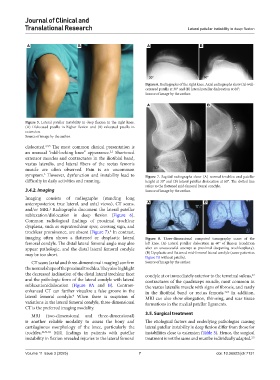
                                                               Figure 6. Radiographs of the right knee. Axial radiographs show (A) well-
                                                               centered patella at 30° and (B) lateral patellar dislocation at 60°.
                                                               Source of image by the author.

                                                                A                        B


            Figure  5. Lateral patellar instability in deep flexion in the right knee.
            (A) Dislocated patella in higher flexion and (B) relocated patella in
            extension.
            Source of image by the author.
            dislocated. 2,3,5  The most common clinical presentation is
            an unusual “odd-locking knee” appearance.  Shortened
                                                2,5
            extensor muscles and contractures in the iliotibial band,
            vastus lateralis, and lateral fibers of the rectus femoris
            muscle  are  often  observed.  Pain  is  an  uncommon
                    3
            symptom.  However, dysfunction and instability lead to   Figure  7. Sagittal radiographs show (A) normal trochlea and patellar
            difficulty in daily activities and running.        height at 30° and (B) lateral patellar dislocation at 60°. The dotted line
                                                               refers to the flattened mid-femoral lateral condyle.
            3.4.2. Imaging                                     Source of image by the author.
            Imaging consists of radiographs (standing long
            anteroposterior, true lateral, and axial views), CT scans,   A              B
            and/or MRI.  Radiographs document the lateral patellar
                      2
            subluxation/dislocation in deep flexion (Figure  6).
            Common radiological findings of proximal trochlear
            dysplasia, such as supratrochlear spur, crossing sign, and
                                                2
            trochlear prominence, are absent (Figure 7).  In contrast,
            imaging often shows a flattened or dysplastic lateral   Figure  8. Three-dimensional computed tomography scans of the
            femoral condyle. The distal lateral femoral angle may also   left  knee.  (A)  Lateral  patellar  dislocation  in  60°  of  flexion  (condition
            appear pathologic, and the distal lateral femoral condyle   after an unsuccessful attempt at proximal deepening trochleoplasty).
            may be too short.                                  (B) Dysplastic and flattened mid-femoral lateral condyle (same patient as
                                                               Figure 7A without patella).
              CT scans (axial and three-dimensional imaging) confirm   Source of image by the author.
            the normal shape of the proximal trochlea. They also highlight
            the decreased inclination of the distal lateral trochlear facet   condyle at or immediately anterior to the terminal sulcus,
                                                                                                            63
            and the pathologic form of the lateral condyle with lateral   contractures of the quadriceps muscle, most common in
            subluxation/dislocation (Figure  8A and  B). Contrast-  the vastus lateralis muscle with signs of fibrosis, and rarely
            enhanced CT can further visualize a false groove in the   in the iliotibial band or rectus femoris.  In addition,
                                                                                                3,63
            lateral femoral condyle.  When there is suspicion of   MRI can also show elongation, thinning, and scar tissue
                                4
            variations in the lateral femoral condyle, three-dimensional   formations in the medial patellar ligaments.
            CT is the preferred imaging modality.
                                                               3.5. Surgical treatment
              MRI    (two-dimensional  and  three-dimensional)
            is another reliable modality to assess the bony and   The etiological factors and underlying pathologies causing
            cartilaginous morphology of the knee, particularly the   lateral patellar instability in deep flexion differ from those for
            trochlea. 22,61,62  MRI findings in patients with patellar   instabilities close to extension (Table 3). Hence, the surgical
            instability in flexion revealed injuries to the lateral femoral   treatment is not the same and must be individually adapted. 2,5


            Volume 11 Issue 3 (2025)                        7                                doi: 10.36922/jctr.7131

