


Page 12 - JCTR-11-3
P. 12
Journal of Clinical and
            Translational Research                                               Lateral patellar instability in deep flexion


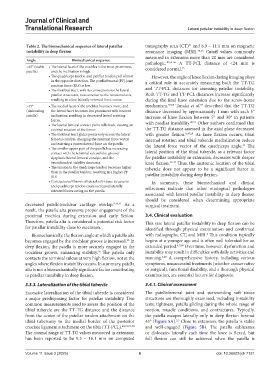
            Table 2. The biomechanical sequence of lateral patellar   tomography scan (CT)  and 8.9 – 11.1 mm on magnetic
                                                                                 51
            instability in deep flexion                        resonance imaging (MRI). 40,53  Cutoff values commonly
                                                               measured in extension more than 20 mm are considered
            Angle              Biomechanical sequence
                                                               pathologic. 40,54-56  A TT-PCL distance of <24  mm is
            <45° (stable  •  The lateral facet of the trochlea is the most prominent,   considered normal. 55
            patella)   and the inclination is high.
                      •  The quadriceps tendon and patellar tendon pull almost   However, the angle of knee flexion during imaging plays
                       in the opposite direction. The patellofemoral (PF) joint   a critical role in accurately measuring both the TT-TG
                       reaction force (JRF) is low.
                      •  The iliotibial tract, with its connections to the lateral   and TT-PCL distances for assessing patellar instability.
                       patellar structures, runs anterior to the rotational axis,   Both TT-TG and TT-PCL distances increase significantly
                       resulting in a low laterally oriented force vector.  during the final knee extension due to the screw-home
                                                                                      57
            >45°      •  The medial facet of the trochlea becomes more, and   mechanism. 57,58  Tanaka et al.  described that the TT-TG
            (dislocating   the lateral facet becomes less prominent with lowered   distance decreased by approximately 1 mm with each 5°
            patella)   inclination, resulting in decreased lateral resisting   increase of knee flexion between 5° and 30° in patients
                       forces.                                                    40,57
                      •  The lateral femoral contact point rolls back, causing an   with patellar instability.   Other authors confirmed that
                       external rotation of the femur.         the TT-TG distance assessed in the axial plane decreased
                      •  The iliotibial tract glides posteriorly across the lateral   with greater flexion. 6,40,59  As knee flexion occurs, tibial
                       femoral condyle, changing the resultant force vector   internal rotation and tibial tubercle medialization reduce
                       and exerting a posterolateral force on the patella.  the lateral force vector of the quadriceps angle.  The
                                                                                                        25
                      •  The smaller upper part of the patella has increasing
                       contact with the terminal sulcus/false groove/  lateral position of the tibial tubercle, as a relevant factor
                       dysplastic lateral femoral condyle, and the   for patellar instability in extension, decreases with deeper
                       osteochondral stability decreases.      knee flexion. 40-42  Thus, the anatomic location of the tibial
                      •  The tension in the quadriceps tendon becomes higher   tubercle does not appear to be a significant factor in
                       than in the patellar tendon, resulting in a higher PF   patellar instability during deep flexion.
                       JRF.
                      •  Contractures/fibrosis of lateral soft‑tissue structures   In summary, these biomechanical and clinical
                       and quadriceps tendon cause increased laterally   reflections indicate that other etiological pathologies
                       oriented forces acting on the patella.
                                                               associated with lateral patellar instability in deep flexion
                                                               should  be  considered  when  determining  appropriate
            decreased patellotrochlear cartilage overlap. 9,16,52  As a   surgical treatment.
            result, the patella alta prevents proper engagement of the
            proximal  trochlea during extension  and  early  flexion.   3.4. Clinical evaluation
            Therefore, patella alta is considered a potential risk factor   This rare lateral patellar instability in deep flexion can be
            for patellar instability close to extension.       identified through physical examination and confirmed
                                                                                         2
              Biomechanically, the flexion angle at which a patella alta   with radiographs, CT, and MRI.  This condition typically
                                                       16
            becomes engaged by the trochlear groove is increased.  In   begins at a younger age and is often well tolerated for an
            deep flexion, the patella is more securely engaged in the   extended period. 4,5,60  Over time, however, dysfunction and
            trochlear groove, enhancing stability.  The patella only   instability may result in difficulties with daily activities and
                                           16
                                                                      5,60
            contacts the terminal sulcus at very high flexion, not at the   running.  A comprehensive history, including various
            angles where flexion instability occurs. In summary, patella   symptoms, unsuccessful treatments (whether conservative
            alta is not a biomechanically significant factor contributing   or surgical), functional disability, and a thorough physical
            to patellar instability in deep flexion.           examination, are essential factors for diagnosis.
            3.3.3. Lateralization of the tibial tubercle       3.4.1. Clinical assessment
            Excessive lateralization of the tibial tubercle is considered   The patellofemoral joint and surrounding soft tissue
            a major predisposing factor for patellar instability. Two   structures are thoroughly examined, including instability
            common measurements used to assess the position of the   tests, tightness, patella gliding during the whole range of
            tibial tubercle  are the  TT-TG distance  and  the  distance   motion, muscle conditions, and contractures. Typically,
            from the center of the patellar tendon attachment on the   the patella escapes laterally only in deep flexion beyond
            tibial tuberosity to the medial border of the posterior   45° (Figure 5A).  Close to extension, the patella is stable
                                                                            2,5
            cruciate ligament attachment on the tibia (TT-PCL). 40,51,53,54    and well-engaged (Figure  5B). The patella subluxates
            The normal range of TT-TG values measured in extension   or dislocates laterally each time the knee is flexed, but
            has  been  reported to  be  9.3  –  16.1  mm  on  computed   full flexion can still be achieved when the patella is


            Volume 11 Issue 3 (2025)                        6                                doi: 10.36922/jctr.7131

