


Page 15 - JCTR-11-3
P. 15
Journal of Clinical and
            Translational Research                                               Lateral patellar instability in deep flexion


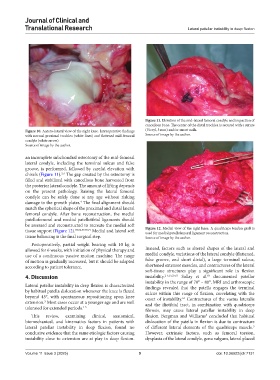
                                                               Figure 11. Elevation of the mid-lateral femoral condyle and impaction of
                                                               cancellous bone. The center of the distal trochlea is secured with a suture
            Figure 10. Antero-lateral view of the right knee. Intraoperative findings   (Vicryl, 5 mm) and/or smart nails.
            with normal proximal trochlea (white lines) and flattened mid-femoral   Source of image by the author.
            condyle (white arrow).
            Source of image by the author.

            an incomplete subchondral osteotomy of the mid-femoral
            lateral condyle, including the terminal sulcus and false
            groove, is performed, followed by careful elevation with
            chisels (Figure 11).  The gap created by the osteotomy is
                           2,4
            filled and stabilized with cancellous bone harvested from
            the posterior lateral condyle. The amount of lifting depends
            on the present pathology. Raising the lateral femoral
            condyle can be safely done at any age without risking
            damage to the growth plates.  The final alignment should
                                   4
            match the spherical shape of the proximal and distal lateral
            femoral  condyle.  After bone  reconstruction,  the medial
            patellofemoral  and  medial  patellotibial  ligaments  should
            be assessed and reconstructed to recreate the medial soft
            tissue support (Figure 12). 33,36,37,70,71  Medial and lateral soft   Figure 12. Medial view of the right knee. A quadriceps tendon graft is
                                                               used for medial patellofemoral ligament reconstruction.
            tissue balancing is the final surgical step.       Source of image by the author.
              Postoperatively, partial weight bearing with 10  kg is
            allowed for 6 weeks, with initiation of physical therapy and   Instead, factors such as altered shapes of the lateral and
            use of a continuous passive motion machine. The range   medial condyle, variations of the lateral condyle (flattened,
            of motion is gradually increased, but it should be adapted   false groove, and short distal), a large terminal sulcus,
            according to patient tolerance.                    shortened extensor muscles, and contractures of the lateral
                                                               soft-tissue structures play a significant role in flexion
            4. Discussion                                      instability. 2-5,15,25,63  Sallay  et al.  documented patellar
                                                                                         63
                                                               instability in the range of 70° – 80°. MRI and arthroscopic
            Lateral patellar instability in deep flexion is characterized   findings revealed that the patella engages the terminal
            by habitual patella dislocation whenever the knee is flexed   sulcus within this range of flexion, correlating with the
            beyond  45°, with spontaneous  repositioning  upon knee   onset of instability.  Contractures of the vastus lateralis
                                                                               63
            extension.  Most cases occur at a younger age and are well   and the iliotibial tract, in combination with quadriceps
                    3
            tolerated for extended periods. 3-5                fibrosis,  may  cause  lateral  patellar  instability  in  deep
              This   review,  examining  clinical,  anatomical,  flexion. Bergman and Williams  concluded that habitual
                                                                                         5
            biomechanical, and kinematics factors in patients with   dislocation of the patella in flexion is due to contracture
            lateral patellar instability in deep flexion, found no   of different lateral elements of the quadriceps muscle.
                                                                                                             5
            conclusive evidence that the same etiologic factors causing   However, extrinsic factors, such as femoral torsion,
            instability close to extension are at play in deep flexion.   dysplasia of the lateral condyle, genu valgum, lateral placed


            Volume 11 Issue 3 (2025)                        9                                doi: 10.36922/jctr.7131

