


Page 42 - JCTR-9-4
P. 42
258                       Sondore et al. | Journal of Clinical and Translational Research 2023; 9(4): 253-260
        Table 6. Virtual histology analysis of CAS group
        Characteristic              Asymptomatic (n=31)    Symptomatic (n=32)   H/O cerebrovascular event (n=15)  P‑value
        Carotid artery
         Necrotic tissue, %, mean±SD    18.9±8.2               18.7±9.5                  23.5±10.7              0.11
         Fibrotic tissue, %, mean±SD    54.4±7.3               52.1±8.4                  53.3±8.6               0.47
         Fibrolipids, %, mean±SD        20.3±9.4              20.9±10.5                  15.9±9.7               0.15
         Calcium, %, mean±SD             7.3±4.9               8.4±7.4                   7.4±3.9                0.69
        Coronary artery
         Necrotic tissue, %, mean±SD    22.8±7.9               21.8±6.8                  23.1±6.9               0.74
         Fibrotic tissue, %, mean±SD    50.4±10.3             52.6±11.2                  53.0±9.2               0.53
         Fibrolipids, %, mean±SD        12.8±9.8               12.8±9.4                  11.6±7.3               0.87
         Calcium, %, mean±SD            14.5±8.4               12.9±8.5                  12.8±7.2               0.62
        CAS: carotid artery stenting, SD: Standard deviation


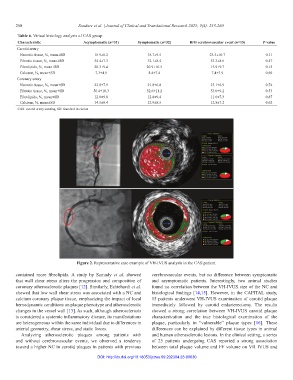
                                 Figure 2. Representative case example of VH-IVUS analysis in the CAS patient.

        contained  more  fibrolipids. A  study  by  Samady  et  al. showed   cerebrovascular events, but no difference between symptomatic
        that wall shear stress alters the progression and composition of   and asymptomatic patients. Interestingly, two animal  studies
        coronary atherosclerotic plaques [12]. Similarly, Eshtehardi et al.   found no correlation between the VH-IVUS size of the NC and
        showed that low wall shear stress was associated with a NC and   histological  findings  [14,15].  However,  in  the  CAPITAL  study,
        calcium coronary plaque tissue, emphasizing the impact of local   15 patients underwent VH-IVUS examination of carotid plaque
        hemodynamic conditions on plaque phenotype and atherosclerotic   immediately  followed by carotid endarterectomy.  The results
        changes in the vessel wall [13]. As such, although atherosclerosis   showed a strong correlation  between  VH-IVUS  carotid  plaque
        is considered a systemic inflammatory disease, its manifestations   characterization  and  the  true  histological  examination  of the
        are heterogeneous within the same individual due to differences in   plaque,  particularly  in  “vulnerable”  plaque  types  [16].  These
        arterial geometry, shear stress, and static forces.     differences can be explained by different tissue types in animal
          Analyzing atherosclerotic  plaques among patients  with   and human atherosclerotic lesions. In the clinical setting, a series
        and without cerebrovascular  events, we observed a tendency   of  25  patients  undergoing  CAS  reported  a  strong  association
        toward a higher NC in carotid plaques in patients with previous   between total plaque volume and FF volume on VH IVUS and
                                          DOI: http://dx.doi.org/10.18053/jctres.09.202304.23-00030

