


Page 65 - JCTR-9-6
P. 65
Malakar et al. | Journal of Clinical and Translational Research 2023; 9(6): 423-432   429


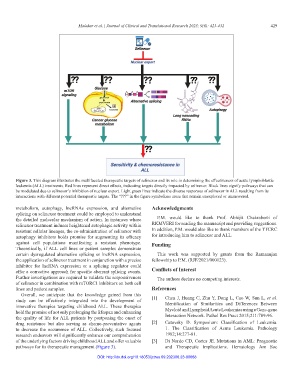
        Figure 3. This diagram illustrates the multifaceted therapeutic targets of selinexor and its role in determining the effectiveness of acute lymphoblastic
        leukemia (ALL) treatments. Red lines represent direct effects, indicating targets directly impacted by selinexor. Black lines signify pathways that can
        be modulated due to selinexor’s inhibition of nuclear export. Light green lines indicate the diverse responses of selinexor in ALL resulting from its
        interactions with different potential therapeutic targets. The “???” in the figure symbolizes areas that remain unexplored or unanswered.

        metabolism,  autophagy,  lncRNAs  expression,  and  alternative   Acknowledgments
        splicing on selinexor treatment could be employed to understand
        the detailed molecular mechanism of action. In instances where   P.M.  would  like  to  thank  Prof.  Abhijit  Chakraborti  of
        selinexor treatment induces heightened autophagic activity within   RKMVERI for reading the manuscript and providing suggestions.
        resistant cellular lineages, the co-administration of selinexor with   In addition, P.M. would also like to thank members of the TTCRC
        autophagy  inhibitors  holds  promise  for  augmenting  its  efficacy   for introducing him to selinexor and ALL.
        against cell  populations  manifesting  a resistant phenotype.   Funding
        Theoretically, if ALL cell lines or patient samples demonstrate
        certain dysregulated alternative splicing or lncRNA expression,   This work was supported by grants from the Ramanujan
        the application of selinexor treatment in conjunction with a precise   fellowship to P.M. (RJF/2021/000123).
        inhibitor  for  lncRNA  expression  or  a  splicing  regulator  could
        offer a corrective approach for specific aberrant splicing events.   Conflicts of Interest
        Further investigations are required to validate the responsiveness   The authors declare no competing interests.
        of selinexor in combination with mTORC1 inhibitors on both cell
        lines and patient samples.                              References
          Overall, we anticipate  that the knowledge gained from this
        study  can  be  effectively  integrated  into  the  development  of   [1]   Chen J, Huang C, Zhu Y, Dong L, Cao W, Sun L, et al.
                                                                      Identification  of  Similarities  and  Differences  Between
        innovative  therapies  targeting  childhood ALL.  These  therapies
        hold the promise of not only prolonging the lifespan and enhancing   Myeloid and Lymphoid Acute Leukemias using a Gene-gene
        the quality of life for ALL patients by postponing the onset of   Interaction Network. Pathol Res Pract 2015;211:789-96.
        drug  resistance  but  also  serving  as  chemo-preventative  agents   [2]   Catovsky  D.  Symposium:  Classification  of  Leukemia.
        to decrease the occurrence  of ALL. Collectively, such focused   1.  The  Classification  of  Acute  Leukemia.  Pathology
        research endeavors will significantly enhance our comprehension   1982;14:277-81.
        of the underlying factors driving childhood ALL and offer valuable   [3]   Di Nardo CD, Cortes JE. Mutations in AML: Prognostic
        pathways for its therapeutic management (Figure 3).           and  Therapeutic  Implications.  Hematology  Am  Soc
                                          DOI: http://dx.doi.org/10.18053/jctres.09.202306.23-00088

