


Page 107 - MI-1-1
P. 107
Microbes & Immunity                                                Factors associated with response to T-VEC


                         A                                   B


                                      C


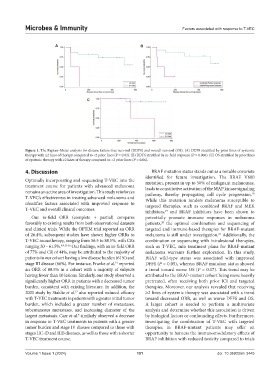
            Figure 1. The Kaplan–Meier analysis for disease failure-free survival (DDFS) and overall survival (OS). (A) DDFS stratified by prior lines of systemic
            therapy with ≥2 lines of therapy compared to <2 prior lines (P = 0.02). (B) DDFS stratified by in-field response (P = 0.006). (C) OS stratified by prior lines
            of systemic therapy with ≥2 lines of therapy compared to <2 prior lines (P = 0.06).

            4. Discussion                                        BRAF mutation status stands out as a notable covariate
                                                               identified for future investigation. The BRAF V600
            Optimally incorporating and sequencing T-VEC into the   mutation, present in up to 50% of malignant melanomas,
            treatment course for patients with advanced melanoma   leads to constitutive activation of the MAP kinase signaling
            remains an active area of investigation. This study reinforces   pathway, thereby propagating cell cycle progression.
                                                                                                            18
            T-VEC’s effectiveness in treating advanced melanoma and   While this mutation renders melanoma susceptible to
            identifies factors associated with improved response to   targeted therapies, such as combined BRAF and MEK
            T-VEC and overall clinical outcomes.               inhibitors,  and BRAF inhibitors have been shown to
                                                                       19
              Our in-field ORR (complete + partial) compares   potentially promote immune responses in melanoma
            favorably to existing results from both observational datasets   patients,  the optimal combination and sequencing of
                                                                      20
            and clinical trials. While the OPTiM trial reported an ORR   targeted and immune-based therapies for BRAF-mutant
            of 26.4%, subsequent studies have shown higher ORRs to   melanoma is still under investigation.  Additionally, the
                                                                                              21
            T-VEC monotherapy, ranging from 56.5 to 88.5%, with CRs   combination or sequencing with intralesional therapies,
            ranging 20 – 61.5%. 6,9,13-16  Our findings, with an in-field ORR   such as T-VEC, into treatment plans for BRAF-mutant
            of 77% and CR of 44%, may be attributed to the majority of   melanoma warrants  further exploration. In  this  study,
            patients in our cohort having a low disease burden (61%) and   BRAF  wild-type  status  was associated with improved
            stage III disease (66%). For instance, Franke et al.  reported   DFFS (P = 0.05), whereas BRAF mutation status showed
                                                  13
            an ORR of 88.5% in a cohort with a majority of subjects   a trend toward worse OS (P = 0.17). This trend may be
            having fewer than 10 lesions. Similarly, our study observed a   attributed to the BRAF-mutant cohort being more heavily
            significantly higher ORR in patients with a decreased tumor   pretreated, often receiving both prior ICI and targeted
            burden, consistent with existing literature. In addition, the   therapies. Moreover, our analysis revealed that receiving
            2021 study by Stahlie et al.  also reported reduced efficacy   ≥2 lines of systemic therapy was associated with a trend
                                 17
            with T-VEC treatments in patients with a greater initial tumor   toward decreased ORR, as well as worse DFFS and OS.
            burden, which included a greater number of metastases,   A  larger cohort is needed to perform a multivariate
            subcutaneous metastases, and increasing diameter of the   analysis and determine whether this association is driven
            largest metastasis. Carr et al.  similarly observed a decrease   by biological factors or confounding effects. Furthermore,
                                  6
            in response to T-VEC treatments in patients with a greater   investigating the combination of T-VEC with targeted
            tumor burden and stage IV disease compared to those with   therapies in BRAF-mutant patients may offer an
            stages IIC–D and IIIB diseases, as well as those with a shorter   opportunity to harness the immunomodulatory effects of
            T-VEC treatment course.                            BRAF inhibition with reduced toxicity compared to trials


            Volume 1 Issue 1 (2024)                        101                               doi: 10.36922/mi.3445

