


Page 41 - MI-1-1
P. 41
Microbes & Immunity                                                  The feature of bladder cancer stem cells


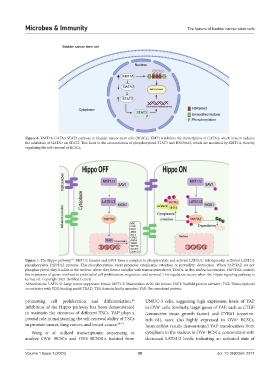
            Figure 6. KMT1A-GATA3-STAT3 pathway in bladder cancer stem cells (BCSCs). KMT1A inhibits the transcription of GATA3, which in turn induces
            the inhibition of GATA3 on STAT3. This leads to the accumulation of phosphorylated STAT3 and H3K9me3, which are mediated by KMT1A, thereby
            regulating the self-renewal of BCSCs.


            Figure 7. The Hippo pathway.  MST1/2 kinases and SAV1 form a complex to phosphorylate and activate LATS1/2. Subsequently, activated LAST1/2
                               151
            phosphorylates YAP/TAZ proteins. This phosphorylation event promotes cytoplasmic retention or proteolytic destruction. When YAP/TAZ are not
            phosphorylated, they localize in the nucleus, where they form a complex with transcription factor TEADs. In this nuclear localization, YAP/TAZ controls
            the expression of genes involved in endothelial cell proliferation, migration, and survival. This regulation occurs when the Hippo signaling pathway is
            turned off. Copyright 2021. BioMed Central.
            Abbreviations: LATS1/2: Large tumor suppressor kinase; MST1/2: Mammalian ste20-like kinase; SAV1: Scaffold protein salvador; TAZ: Transcriptional
            co-activator with PDZ-binding motif; TEAD: TEA domain family member; YAP: Yes-associated protein.

            promoting cell proliferation and differentiation.    UMUC-3  cells, suggesting high expression levels of YAP
                                                         68
            Inhibition of the Hippo pathway has been demonstrated   in OV6  cells. Similarly, target genes of YAP, such as CTGF
                                                                     +
            to maintain the stemness of different TSCs. YAP plays a   (connective tissue growth  factor) and CYR61 (cysteine-
            pivotal role in maintaining the self-renewal ability of TSCs   rich 61), were also highly expressed in OV6  BCSCs.
                                                                                                      +
            in prostate cancer, lung cancer, and breast cancer. 69-71  Immunoblot results demonstrated YAP translocation from
              Wang  et al. utilized transcriptomic sequencing to   cytoplasm to the nucleus in OV6 BCSCs, concomitant with
                                                                                        +
            analyze OV6  BCSCs and OV6 BCNSCs isolated from    decreased LATS1/2 levels, indicating an activated state of
                      +
                                      -
            Volume 1 Issue 1 (2024)                         35                               doi: 10.36922/mi.2377

