


Page 39 - MI-1-1
P. 39
Microbes & Immunity                                                  The feature of bladder cancer stem cells


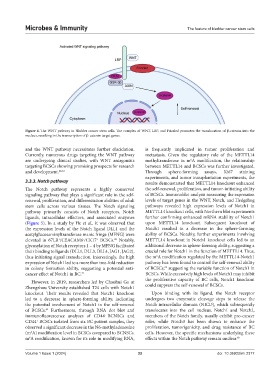
            Figure 4. The WNT pathway in bladder cancer stem cells. The complex of WNT, LRP, and Frizzled promotes the translocation of β-catenin into the
            nucleus, resulting in the transcription of β-catenin target genes.


            and the WNT pathway necessitates further elucidation.   is frequently implicated in tumor proliferation and
            Currently, numerous drugs targeting the WNT pathway   metastasis. Given the regulatory role of the METTL14
            are  undergoing  clinical studies, with WNT  antagonists   methyltransferase in m A modification, the relationship
                                                                                  6
            targeting BCSCs showing promising prospects for research   between METTL14 and BCSCs was further investigated.
            and development. 62,63                             Through   sphere-forming  assays,  Ki67  staining
                                                               experiments, and tumor transplantation experiments, the
            3.3.3. Notch pathway                               results demonstrated that METTL14 knockout enhanced
            The Notch pathway represents a highly conserved    the self-renewal, proliferation, and tumor-initiating ability
            signaling pathway that plays a significant role in the self-  of BCSCs. Immunoblot analysis measuring the expression
            renewal, proliferation, and differentiation abilities of adult   levels of target genes in the WNT, Notch, and Hedgehog
            stem cells across various tissues. The Notch signaling   pathways  revealed  high  expression  levels  of  Notch1  in
            pathway primarily consists of Notch receptors, Notch   METTL14 knockout cells, with Northern blot experiments
            ligands,  intracellular  effectors,  and  associated  enzymes   further confirming  enhanced  mRNA  stability  of Notch1
            (Figure 5). In a study by He et al., it was observed that   upon METTL14 knockout. Subsequent knockout of
            the expression levels of the Notch ligand DLL1 and the   Notch1 resulted in a decrease in the sphere-forming
            acetylglucosaminyltransferase manic fringe (MFNG) were   ability of BCSCs. Notably, further experiments involving
            elevated  in  67LR /CEACAM6 /CK17   BCSCs.   Notably,   METTL14 knockout in Notch1 knockout cells led to an
                                    -
                                                  41
                                          +
                          +
            glycosylation of Notch receptors 1 – 4 by MFNG facilitated   additional decrease in sphere-forming ability, suggesting a
            their binding to ligands (DLL1, DLL3, DLL4, JAG1, JAG2),   crucial role for Notch1 in the function of METTL14. Thus,
                                                                    6
            thus initiating signal transduction. Interestingly, the high   the m A modification regulated by the METTL14-Notch1
            expression of Notch1 led to a more than two-fold reduction   pathway has been found to control the self-renewal ability
                                                                       64
            in colony formation ability, suggesting a potential anti-  of BCSCs,  suggesting the variable function of Notch1 in
            cancer effect of Notch1 in BC. 41                  BCSCs. While excessively high levels of Notch1 may inhibit
                                                               the proliferative capacity of BC cells, Notch1 knockout
              However, in 2019, researchers led by Chaohui Gu at
            Zhengzhou University established T24 cells with Notch1   could suppress the self-renewal of BCSCs.
            knockout. Their results revealed that Notch1 knockout   Upon  binding  with  its  ligand,  the  Notch  receptor
            led to a decrease in sphere-forming ability, indicating   undergoes two enzymatic cleavage steps to release the
            the potential involvement of Notch1 in the self-renewal   Notch intracellular domain (NICD), which subsequently
            of BCSCs.  Furthermore, through RNA dot blot and   translocates into the cell nucleus. Notch1 and Notch2,
                    64
            immunofluorescence analyses of CD44 BCNSCs and     members of the Notch family, usually exhibit pro-cancer
                                              -
            CD44  BCSCs isolated from six BC patient samples, they   roles, while Notch3 has been shown to enhance the
                 +
            observed a significant decrease in the N6-methyladenosine   proliferation, tumorigenicity, and drug resistance of BC
              6
            (m A) modification level in BCSCs compared to BCNSCs.   cells. However, the specific mechanisms underlying these
             6
            m A modification, known for its role in modifying RNA,   effects within the Notch pathway remain unclear. 65
            Volume 1 Issue 1 (2024)                         33                               doi: 10.36922/mi.2377

