


Page 38 - MI-1-1
P. 38
Microbes & Immunity                                                  The feature of bladder cancer stem cells


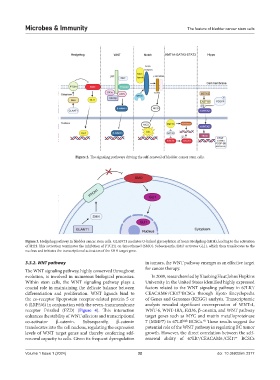
                                 Figure 2. The signaling pathways driving the self-renewal of bladder cancer stem cells.


            Figure 3. Hedgehog pathway in bladder cancer stem cells. GLANT1 mediates O-linked glycosylation of Sonic Hedgehog (SHH), leading to the activation
            of SHH. This activation terminates the inhibition of PTCH1 on Smoothened (SMO). Subsequently, SMO activates GLI1, which then translocates to the
            nucleus and initiates the transcriptional activation of the SHH target gene.

            3.3.2. WNT pathway                                 in tumors, the WNT pathway emerges as an effective target
            The WNT signaling pathway, highly conserved throughout   for cancer therapy.
            evolution, is involved in numerous biological processes.   In 2009, researchers led by Xiaobing He at Johns Hopkins
            Within stem cells, the WNT signaling pathway plays a   University in the United States identified highly expressed
                                                                                                            +
            crucial role in maintaining the delicate balance between   factors related to the WNT signaling pathway in 67LR /
                                                                              +
                                                                        -
            differentiation and proliferation. WNT ligands bind to   CEACAM6 /CK17 BCSCs through Kyoto Encyclopedia
            the co-receptor lipoprotein receptor-related protein 5 or   of Genes and Genomes (KEGG) analysis. Transcriptomic
            6 (LRP5/6) in conjunction with the seven-transmembrane   analysis revealed significant overexpression of WNT-4,
            receptor Frizzled (FZD) (Figure  4). This interaction   WNT-6, WNT-10A, FZD6, β-catenin, and WNT pathway
            enhances the stability of WNT effectors and transcriptional   target genes such as MYC and matrix metalloproteinase
            co-activator   β-catenin.  Subsequently,  β-catenin   7 (MMP7) in 67LR high  BCSCs.  These results suggest the
                                                                                       41
            translocates into the cell nucleus, regulating the expression   potential role of the WNT pathway in regulating BC tumor
            levels of WNT target genes and thereby conferring self-  growth. However, the direct correlation between the self-
                                                                                                -
                                                                                                     +
                                                                                     +
            renewal capacity to cells. Given its frequent dysregulation   renewal ability of 67LR /CEACAM6 /CK17  BCSCs
            Volume 1 Issue 1 (2024)                         32                               doi: 10.36922/mi.2377

