


Page 115 - MI-2-1
P. 115
Microbes & Immunity                                                 Anti-mouse CXCR5 monoclonal antibody


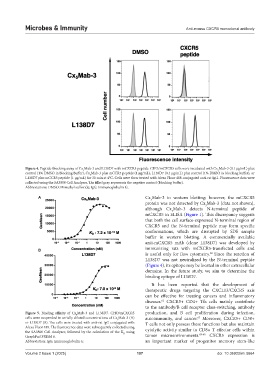
            Figure 4. Peptide-blocking assay of Cx Mab-3 and L138D7 with mCXCR5 peptide. CHO/mCXCR5 cells were incubated with Cx Mab-3 (0.1 µg/mL) plus
                                                                                              5
                                    5
            control (1% DMSO in blocking buffer), Cx Mab-3 plus mCCR5 peptide (1 μg/mL), L138D7 (0.1 µg/mL) plus control (1% DMSO in blocking buffer), or
                                       5
            L138D7 plus mCCR5 peptide (1 μg/mL) for 30 min at 4°C. Cells were then treated with Alexa Fluor 488-conjugated anti-rat IgG. Fluorescence data were
            collected using the SA3800 Cell Analyzer. The filled gray represents the negative control (blocking buffer).
            Abbreviations: DMSO: Dimethyl sulfoxide; IgG: Immunoglobulin G.
                 A                                             Cx Mab-3  in western  blotting; however, the mCXCR5
                                                                 5
                                                               protein was not detected by Cx Mab-3 (data not shown),
                                                                                        5
                                                               although Cx Mab-3 detects N-terminal peptide of
                                                                          5
                                                               mCXCR5 in ELISA (Figure 1). This discrepancy suggests
                                                               that both the cell surface-expressed N-terminal region of
                                                               CXCR5 and the N-terminal peptide may form specific
                                                               conformations, which are disrupted by SDS sample
                                                               buffer in western blotting. A  commercially available
                                                               anti-mCXCR5 mAb (clone L138D7) was developed by
                 B                                             immunizing rats with mCXCR5-transfected cells and
                                                               is useful only for flow cytometry.  Since the reaction of
                                                                                          60
                                                               L138D7 was not neutralized by the N-terminal peptide
                                                               (Figure 4), its epitope may be located in other extracellular
                                                               domains. In the future study, we aim to determine the
                                                               binding epitope of L138D7.
                                                                 It has been reported that the development of
                                                               therapeutic drugs targeting the CXCL13/CXCR5 axis
                                                               can be effective for treating cancers and inflammatory
                                                               diseases.  CXCR5+ CD4+ Tfh cells mainly contribute
                                                                      61
                                                               to the antibody/B cell receptor class-switching, antibody
            Figure  5.  Binding affinity of Cx Mab-3 and L138D7. CHO/mCXCR5   production, and B cell proliferation during infection,
                                 5
            cells were suspended in serially diluted concentrations of Cx Mab-3 (A)   autoimmunity,  and  cancer.   Moreover,  CXCR5+  CD8+
                                                                                     62
                                                   5
            or L138D7 (B). The cells were treated with anti-rat IgG conjugated with   T cells not only possess these functions but also maintain
            Alexa Fluor 488. The fluorescence data were subsequently collected using   cytolytic activity similar to CD8+ T effector cells within
            the SA3800 Cell Analyzer, followed by the calculation of the K  using
                                                      D
            GraphPad PRISM 6.                                  tumor microenvironments. 63-65  CXCR5 expression is
            Abbreviation: IgG: Immunoglobulin G.               an important marker of progenitor memory stem-like
            Volume 2 Issue 1 (2025)                        107                               doi: 10.36922/mi.5664

