


Page 103 - MI-2-3
P. 103
Microbes & Immunity                                                SARS-CoV-2 complementary classification


            the suggested classification system, none of the examined   4. Discussion
            SARS-CoV-2 variants qualify as VOCs by both genetic and
            functional impact criteria, reinforcing the need for a revised   Although the present SARS-CoV-2 classification schemes
            classification framework based on objective thresholds.  played a role in early variant detection and response
                                                               planning, several shortcomings remain that could be
                                                               addressed with a complementary evolutionary and
            Table 2. Estimates of evolutionary divergence over sequence
            pairs between HCV subtypes                         biologically based system. First, the present schemes
                                                               overgeneralize risk, frequently triggering disproportionate
            HCV species 1   HCV species 2  Genetic distance (s/s)  public reactions before sufficient epidemiological data are
            1a                  1b               0.371         available. Second, they lack robust quantitative severity
            1a                  3a               0.613         metrics, often prioritizing genetic alterations over concrete
            1b                  3a               0.554         clinical outcomes or real-world vaccine effectiveness.
                                                               Third, they inadvertently amplify public anxiety by
            1a                  4a               0.599
                                                               reinforcing the notion that each new variant constitutes an
            1b                  4a               0.637         existential crisis, rather than a predictable feature of viral
            3a                  4a               0.674         evolution. 123,124  A shift toward a refined, biologically relevant
            Abbreviations: HCV: Hepatitis C virus; s/s: Substitutions per site.  classification system is therefore needed. Rather than


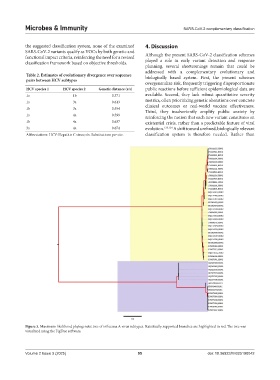
            Figure 3. Maximum likelihood phylogenetic tree of influenza A virus subtypes. Statistically supported branches are highlighted in red. The tree was
            visualized using the FigTree software.


            Volume 2 Issue 3 (2025)                         95                           doi: 10.36922/MI025190042

