


Page 105 - MI-2-3
P. 105
Microbes & Immunity                                                SARS-CoV-2 complementary classification


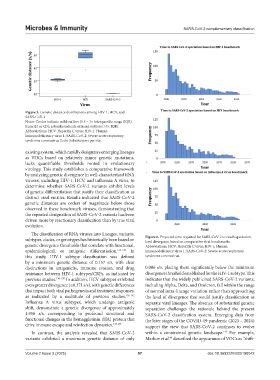
            Figure 5. Genetic distance distributions among HIV-1, HCV, and
            SARS-CoV-2
            Notes: Circles indicate mild outliers (1.5 – 3× interquartile range (IQR)
            from Q1 or Q3); asterisks indicate extreme outliers (>3× IQR).
            Abbreviations: HCV: Hepatitis C virus; HIV-1: Human
            immunodeficiency virus 1; SARS-CoV-2: Severe acute respiratory
            syndrome coronavirus 2; s/s: Substitutions per site.

            existing system, which rapidly designates emerging lineages
            as VOCs based on relatively minor genetic mutations,
            lacks quantifiable thresholds rooted in evolutionary
            virology. This study establishes a comparative framework
            by analyzing genetic divergence in well-characterized RNA
            viruses, including HIV-1, HCV, and influenza A virus, to
            determine whether SARS-CoV-2 variants exhibit levels
            of genetic differentiation that justify their classification as
            distinct viral entities. Results indicated that SARS-CoV-2
            genetic distances are orders of magnitude below those
            observed in these benchmark viruses, demonstrating that
            the repeated designation of SARS-CoV-2 variants has been
            driven more by reactionary classification than by true viral
            evolution.
              The classification of RNA viruses into lineages, variants,
            subtypes, clades, or genotypes has historically been based on   Figure 6. Projected time required for SARS-CoV-2 to reach speciation-
                                                               level divergence based on comparative viral benchmarks
            genetic divergence thresholds that correlate with functional,   Abbreviations: HCV: Hepatitis C virus; HIV-1: Human
            epidemiological, or antigenic differentiation. 133-135  In   immunodeficiency virus 1; SARS-CoV-2: Severe acute respiratory
            this  study,  HIV-1 subtype  classification was  defined   syndrome coronavirus.
            by a minimum genetic distance of 0.157  s/s, with clear
            distinctions in  antigenicity,  immune evasion,  and drug   0.006 s/s, placing them significantly below the minimum
            resistance between HIV-1 subtypes/CRFs, as indicated by   divergence threshold established for the HIV-1 subtype. This
            previous studies. 136-138  In addition, HCV subtypes exhibited   indicates that the widely publicized SARS-CoV-2 variants,
            even greater divergence (≥0.371 s/s), with genetic differences   including Alpha, Delta, and Omicron, fall within the range
            that impact both viral pathogenesis and treatment responses,   of normal intra-lineage variation rather than approaching
            as indicated by a multitude of previous studies. 139-142    the level of divergence that would justify classification as
            Influenza A virus subtypes, which undergo antigenic   separate viral lineages. The absence of substantial genetic
            shift, demonstrate a genetic divergence of approximately   separation challenges the rationale behind the present
            1.956  s/s, corresponding to  profound structural and   SARS-CoV-2 classification system. Emerging data from
            functional changes in the hemagglutinin (HA) protein that   the later stages of the COVID-19 pandemic (2023 – 2024)
            drive immune escape and reinfection dynamics. 143,144  support the view that SARS-CoV-2 continues to evolve
              In contrast, the analysis revealed that SARS-CoV-2   within a constrained genetic landscape.  For example,
                                                                                                145
            variants exhibited a maximum genetic distance of only   Markov et al.  described the appearance of VOCs as “shift-
                                                                         49
            Volume 2 Issue 3 (2025)                         97                           doi: 10.36922/MI025190042

