


Page 172 - MI-2-3
P. 172
Microbes & Immunity                                     Neurological and cranial involvement in SAPHO syndrome


            A                      B                           of inflammatory arthralgias affecting both axial and
                                                               peripheral joints, consistent with the characteristics of
                                                               spondyloarthropathy, further corroborating the possibility
                                                               of an underlying systemic immune-mediated disorder.
                                                               This possibility was brought to our attention by the fact
                                                               that her son had been diagnosed with SAPHO syndrome.
                                                                                                             3
                                                               In our patient, a psoriatic spondyloarthropathy diagnosis
                                                               was also considered; however, findings of the cranial and
                                                               sternum osteitis categorized it as SAPHO syndrome end
                                                               of the spectrum, added by the fact of concurrent SAPHO
                                                               syndrome diagnosis on her son.

                                                                 SAPHO syndrome is classically characterized by a
                                                               variety  of osteoarticular disorders –  synovitis,  osteitis,
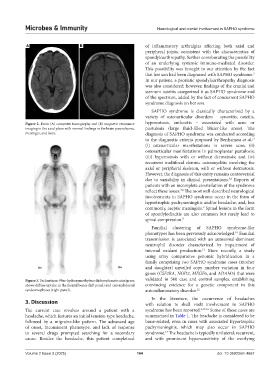
            Figure 2. Brain (A) computer tomography and (B) magnetic resonance   hyperostosis, enthesitis – associated with acne or
            imaging in the axial plane with normal findings in the brain parenchyma,   pustulosis  (large  fluid-filled  blister-like  areas).  The
            meninges, and bone.                                diagnosis of SAPHO syndrome was conducted according
                                                               to the diagnostic criteria proposed by Benhamou et al.:
                                                                                                             4
                                                               (i) osteoarticular manifestations in severe acne; (ii)
                                                               osteoarticular manifestations in palmoplantar pustulosis;
                                                               (iii) hyperostosis with or without dermatosis; and (iv)
                                                               recurrent multifocal chronic osteomyelitis involving the
                                                               axial or peripheral skeleton, with or without dermatosis.
                                                               However, the diagnosis of this entity remains controversial
                                                               due to variability in clinical presentations.  Reports of
                                                                                                  5,6
                                                               patients with an incomplete constellation of the syndrome
                                                               reflect these issues.  The most well-described neurological
                                                                              7,8
                                                               involvements in SAPHO syndrome occur in the form of
                                                               hypertrophic pachymeningitis and/or headache, and, less
                                                               commonly, aseptic meningitis.  Spinal lesions in the form
                                                                                       9
                                                               of  spondylodiscitis  are  also common but  rarely  lead  to
                                                               spinal compression. 9
                                                                 Familial  clustering  of  SAPHO  syndrome-like
                                                               phenotypes has been previously acknowledged.  Familial
                                                                                                     10
                                                               transmission is associated with an autosomal-dominant
                                                               neutrophil disorder characterized by impairment of
                                                               internal oxidant production.  More recently, a study
                                                                                       11
                                                               using array comparative genomic hybridization in a
                                                               family comprising two SAPHO syndrome cases (mother
                                                               and  daughter)  unveiled  copy  number  variation  in  four
                                                               genes (CSF2RA, NOD2, MEGF6, and ADAM5) that were
            Figure 3. Technetium-99m-hydroxymethylene diphosphonate scintigram   validated in 360  case and control samples, establishing
            shows diffuse uptake in the frontal bones (left panel) and cervical/dorsal   convincing evidence for a genetic component in this
            syndesmophytes (right panel).                      autoinflammatory disorder. 12
                                                                 In the literature, the occurrence of headaches
            3. Discussion                                      with relation to skull vault involvement in SAPHO

            The current case revolves around a patient with a   syndrome has been reported. 2,13-16  Some of these cases are
            headache, which features an initial tension-type headache,   summarized in Table 1. The headache is considered to be
            followed by a migraine-like pattern. The advanced age   bone-related, even in cases with associated hypertrophic
            of onset, inconsistent phenotype, and lack of response   pachymeningitis, which may also occur in SAPHO
            to several drugs prompted searching for a secondary   syndrome.  The headache is typically unilateral, recurrent,
                                                                       17
            cause. Besides  the  headache,  this patient  complained   and with prominent hypersensitivity of the overlying

            Volume 2 Issue 3 (2025)                        164                               doi: 10.36922/mi.4667

