


Page 171 - MI-2-3
P. 171
Microbes & Immunity                                     Neurological and cranial involvement in SAPHO syndrome


            etiology. Besides, we review the existing evidence in the   A              B
            literature to corroborate this association.
            2. Case presentation

            A  64-year-old female  presented  to the neurology
            outpatient clinic in 2016 with complaints of headaches. She
            described a heavyweight sensation on the left hemicrania
            associated with periods of intense, sharp, frontal pain
            that  sometimes  lasted  for  days,  often  interrupting  sleep.
            She had suffered from headaches during adolescence.   C                    D
            Over-the-counter anti-inflammatory drugs were seldom
            effective in relieving her symptoms. Her past medical
            history showed epidermoid papilloma of the tongue, which
            was removed in 2014. Further inquiry of her past medical
            history revealed inflammatory polyarthralgia occurring
            in her hands, wrists, sternum, and lumbar spine. She also
            reported occasional vesicles appearing in the lower back.
              The neurological  examination was  unremarkable,
            except for the discovery of allodynia in the left hemicrania.   Figure 1. (A and B) Computed tomography-angiogram shows interruption
            The patient reported no pain on the superficial temporal   in the C4–C5 segments of the left internal carotid artery, after the carotid
            arteries. A  computed tomography (CT)-angiogram    bulb, featuring a “pencil-tip pattern.” The left carotid canal is considerably
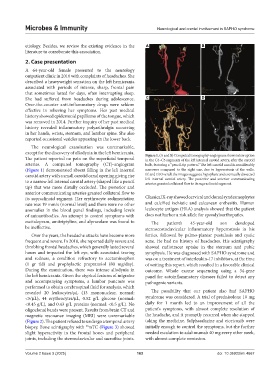
            (Figure 1) demonstrated absent filling in the left internal   narrower compared to the right one, due to hyperostosis of the walls.
            carotid artery with a small carotid canal opening giving rise   (C and D) Overall, the images suggest a hypoplasic and eventually dissected
            to a narrow left internal carotid artery (shaped like a pencil   left internal carotid artery. The posterior and anterior communicating
                                                               arteries granted collateral flow to its supraclinoid segment.
            tip) that was more distally occluded. The posterior and
            anterior communicating arteries granted collateral flow to
            its supraclinoid segment. Her erythrocyte sedimentation   Classical X-ray showed cervical and dorsal syndesmophytes
            rate was 19 mm/s (normal level) and there were no other   and calcified ischiatic and calcanean enthesitis. Human
            anomalies in the blood panel findings, including levels   leukocyte antigen (HLA) analysis showed that the patient
            of autoantibodies. An attempt to control symptoms with   does not harbor a risk allele for spondyloarthopaties.
            escitalopram, amitriptyline, and alprazolam was found to   The  patient’s  45-year-old  son  developed
            be ineffective.                                    sternocostoclavicular inflammatory hyperostosis in his
              Over the years, the headache attacks have become more   forties, followed by palmo-plantar pustulosis and cystic
            frequent and severe. In 2018, she reported daily severe and   acne. He had no history of headaches. His scintigraphy
            throbbing frontal headaches, which generally lasted several   showed radiotracer uptake in the sternum and pubic
            hours and impacted the left eye, with associated tearing   symphysis. He was diagnosed with SAPHO syndrome and
            and redness, a condition  refractory to acetaminophen   was on a treatment of interleukin-17 inhibitors, at the time
            (1 gr tid) and prophylactic propranolol (80  mg/day).   of writing this report, which resulted in a favorable clinical
            During the examination, there was intense allodynia in   outcome. Whole exome sequencing using a 34-gene
            the left hemicrania. Given the atypical features of migraine   panel for autoinflammatory diseases failed to detect any
            and  accompanying  symptoms,  a  lumbar  puncture  was   pathogenic variants.
            performed to obtain cerebrospinal fluid for analysis, which
            revealed 20 leukocytes/µL (13 mononuclear, normal:   The possibility that our patient also had SAPHO
            <5/µL),  44  erythrocytes/µL,  0.52  g/L  glucose  (normal:   syndrome was considered. A trial of prednisolone 10 mg
            <0.45 g/L), and 0.43 g/L proteins (normal: <0.5 g/L). No   daily for 1  month led to an improvement of all the
            oligoclonal bands were present. Results from brain CT and   patient’s symptoms, with almost complete resolution of
            magnetic resonance imaging (MRI) were unremarkable   the headache, and it promptly recurred when she stopped
            (Figure 2). The patient refused to undergo a temporal artery   taking the medicine. Sulphasalazine and etoricoxib were
                                      99
            biopsy. Bone scintigraphy with  mTC (Figure 3) showed   initially enough to control the symptoms, but she further
            slight hyperactivity in the frontal bones and peripheral   needed escalation to adalimumab 40 mg every other week,
            joints, including the sternoclavicular and sacroiliac joints.   with almost complete remission.


            Volume 2 Issue 3 (2025)                        163                               doi: 10.36922/mi.4667

