


Page 173 - MI-2-3
P. 173
Microbes & Immunity                                     Neurological and cranial involvement in SAPHO syndrome


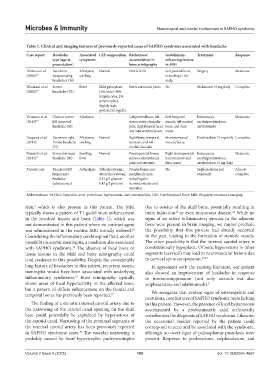
            Table 1. Clinical and imaging features of previously reported cases of SAPHO syndrome associated with headache
            Case report  Headache   Associated  CSF composition Radiotracer   Gadolinium-  Treatment  Response
                       type (age at   symptoms          accumulation in   enhancing lesions
                       presentation)                    bone scintigraphy  in MRI
            DiMeco et al.   Recurrent   Allodynia,   Normal  First left rib  Left parietal bone,   Surgery  Moderate
            (2000) 14  incapacitating   swelling                       extending to the
                       headaches (34)                                  scalp
            Hiwatani et al.  Severe   Fever  Mild pleocytosis   Sternoclavicular joints  No  Meloxicam 10 mg daily  Complete
            (2008) 15  headache (52)       (101/mm , 98%
                                                 3
                                           lymphocytes, 2%
                                           polymorphs),
                                           slightly high
                                           protein (52 mg/dL)
            Uematsu et al.   Chronic severe   Allodynia  -  Left parietal bone, left   Left temporal   Intravenous   Moderate
            (2012) 16  left temporal                    sterno-costo-clavicular   muscle, left parietal  methylprednisolone,
                       headache (50)                    joint, right femoral head,  bone, and dura   methotrexate
                                                        and intervertebral joints mater
            Tsugawa et al.   Recurrent right   Allodynia,   Normal  Right bone, temporal,   Frontotemporal   Prednisolone 15 mg daily Complete
            (2014) 2   frontal headache  swelling       sternum, and left   muscle/fascia
                       (57)                             medial clavicula
            Shiraishi et al.   Severe forehead  Swelling,   Normal  Frontoparietal bones,   Right frontoparietal  Intravenous   Moderate
            (2014) 17  headache (40)  fever             sternocostoclavicular   bone marrow and   methylprednisolone,
                                                        joint and sternum  dura mater  prednisolone 15 mg daily
            Present case  Recurrent left   Arthralgias 20 leukocytes/µL,   Frontal bones and   No  Sulphasalazine and   Almost
                       hemicrania          44 erythrocytes/µL,  peripheral joints,   etoricoxib      complete
                       headache            0.52 g/L glucose   including the
                       (adolescence)       0.43 g/L proteins  sternoclavicular and
                                                        sacroiliac
            Abbreviations: SAPHO: Synovitis, acne, pustulosis, hyperostosis, and osteomyelitis, CSF: Cerebrospinal fluid; MRI: Magnetic resonance imaging.

            skin,  which is also present in this patient. The MRI   due to osteitis of the skull bone, potentially resulting in
                2
                                                                                                    21
                                                                            12
            typically shows a pattern of T1 gadolinium enhancement   brain infarction  or even moyamoya disease.  While no
            in the involved tissues and bone (Table  1), which was   signs of an active inflammatory process in the adjacent
            not demonstrated in this patient where no contrast agent   bone were present in brain imaging, we cannot preclude
            was  administered in  the  routine  MRI  initially  ordered.    the possibility that this process had already occurred
                                                         18
            Considering the inflammatory cerebrospinal fluid, another   in  the  past,  leading  to  the  formation  of  stenotic  vessels.
            possibility is aseptic meningitis, a condition also associated   The other possibility is that the internal carotid artery is
                                15
            with SAPHO syndrome.  The absence of focal bone or   constitutionally hypoplasic. Of note, hyperostosis in other
            tissue  lesions  in  the  MRI and  bone  scintigraphy could   segments (cervical) may lead to neurovascular lesions due
            lend credence to this possibility. Despite the considerably   to cervical spine compression. 22,23
            long history of headaches in this patient, recurrent aseptic   In agreement with the existing literature, our patient
            meningitis would have been associated with underlying   also  showed  an  improvement  of  headache  in  response
            inflammatory syndromes.  Bone scintigraphy typically   to immunosuppression (not only steroids but also
                                 19
            shows areas of focal hyperactivity in the affected bone,   sulphasalazine and adalimumab). 2
            but a pattern of diffuse enhancement on the frontal and
            temporal bones has previously been reported. 17      We recognize  that evident signs of osteomyelitis and
                                                               pustulosis, core features of SAPHO syndrome, were lacking
              The finding of a stenotic internal carotid artery due to   in this patient. However, the presence of focal hyperostosis
            the narrowing of the carotid canal opening on the skull   accompanied  by  a  predominantly  axial  arthropathy
            base could potentially be explained by hyperostosis of   corroborates the diagnosis of SAPHO syndrome. Likewise,
            the carotid canal. Narrowing of the proximal segments of   the occasional vesicles reported by the patient could
            the internal carotid artery has been previously reported   correspond to acne and be associated with the syndrome,
            in SAPHO syndrome cases.  The vascular narrowing is   although no overt signs of palmoplantar pustulosis were
                                   20
            probably  caused  by  focal  hypertrophic  pachymeningitis   present. Response to prednisolone, sulphasalazine, and

            Volume 2 Issue 3 (2025)                        165                               doi: 10.36922/mi.4667

