


Page 164 - MI-2-4
P. 164
Microbes & Immunity                                                  A novel anti-EphA8 monoclonal antibody


               A                                                    A


               B                                                    B


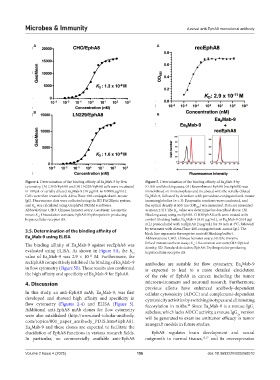
            Figure 4. Determination of the binding affinity of Ea Mab-9 by flow   Figure 5. Determination of the binding affinity of Ea Mab-9 by
                                                                                                8
                                             8
            cytometry. (A) CHO/EphA8 and (B) LN229/EphA8 cells were incubated   ELISA and blocking assay. (A) Recombinant EphA8 (recEphA8) was
            in 100 μL of serially diluted Ea Mab-9 (10 μg/mL to 0.0006 μg/mL).   immobilized on immunoplates and incubated with the serially diluted
                               8
            Cells were then treated with Alexa Fluor 488-conjugated anti-mouse   Ea Mab-9, followed by detection with peroxidase-conjugated anti-mouse
                                                                8
            IgG. Fluorescence data were collected using the BD FACSLyric system,   immunoglobulins (n = 3). Enzymatic reactions were conducted, and
            and K  was calculated using GraphPad PRISM 6 software.   the optical density at 655 nm (OD ) was measured. Data are presented
                D
                                                                                     655
            Abbreviations: CHO: Chinese hamster ovary; GeoMean: Geometric   as mean ± SD. The K  value was determined as described above. (B)
                                                                            D
            mean; K : Dissociation constant; EphA8: Erythropoietin-producing   Blocking assay using recEphA8. CHO/EphA8 cells were treated with
                 D
            hepatocellular receptor A8.                        control blocking buffer, Ea Mab-9 (0.01 μg/mL), or Ea Mab-9 (0.01 μg/
                                                                                                 8
                                                                                8
                                                               mL) preincubated with recEphA8 (3 μg/mL) for 30 min at 4°C, followed
            3.5. Determination of the binding affinity of      by treatment with Alexa Fluor 488-conjugated anti-mouse IgG. The
                                                               black line represents the negative control (blocking buffer).
            Ea Mab-9 using ELISA                               Abbreviations: CHO: Chinese hamster ovary; ELISA: Enzyme-
              8
            The binding affinity of Ea Mab-9 against recEphA8 was   linked immunosorbent assay; K : Dissociation constant; OD: Optical
                                                                                   D
                                                               density; SD: Standard deviation; EphA8: Erythropoietin-producing
                                 8
            evaluated using  ELISA.  As shown in  Figure  5A,  the  K    hepatocellular receptor A8.
                                                         D
            value of Ea Mab-9 was  2.9 × 10  M. Furthermore, the
                                       -11
                     8
            recEphA8 competitively inhibited the binding of Ea Mab-9   antibodies  are  suitable for  flow cytometry. Ea Mab-9
                                                    8
                                                                                                       8
            in flow cytometry (Figure 5B). These results also confirmed   is expected to lead to a more detailed elucidation
            the high affinity and specificity of Ea Mab-9 for EphA8.
                                         8                     of  the  role  of  EphA8  in  cancer,  including  the  tumor
            4. Discussion                                      microenvironment and neuronal research. Furthermore,
                                                               previous efforts have enhanced antibody-dependent
            In  this  study, an  anti-EphA8  mAb,  Ea Mab-9,  was  first   cellular cytotoxicity (ADCC) and complement-dependent
                                            8
            developed and showed high affinity and specificity in   cytotoxicity activities by switching isotypes and eliminating
            flow cytometry (Figures  2-4) and ELISA (Figure  5).   fucosylation in mAbs.  Since Ea Mab-9 is a mouse IgG
                                                                                 32
                                                                                          8
                                                                                                             1
            Additional anti-EphA8 mAb clones for flow cytometry   subclass, which lacks ADCC activity, a mouse IgG  version
                                                                                                      2a
            were also established (http://www.med-tohoku-antibody.  will be generated to examine antitumor efficacy in tumor
            com/topics/001_paper_antibody_PDIS.htm#EphA8).     xenograft models in future studies.
            Ea Mab-9 and these clones are expected to facilitate the
              8
            elucidation of EphA8 functions in various research fields.   EphA8 regulates brain development and neural
            In  particular,  no  commercially  available  anti-EphA8   outgrowth in normal tissues, 15,17  and its overexpression
            Volume 2 Issue 4 (2025)                        156                           doi: 10.36922/MI025060010

