


Page 37 - MSAM-1-1
P. 37
Materials Science in Additive Manufacturing                                Cylindrical path planning for AM


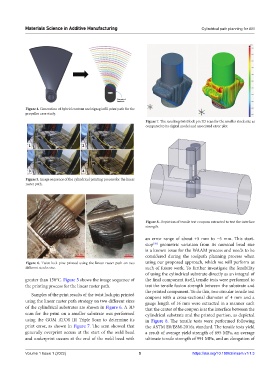
            Figure 4. Generation of hybrid contour and zigzag infill print path for the
            propeller case study.
                                                               Figure 7. The resulting twist lock pin 3D scan for the smaller stock size as
                                                               compared to its digital model and associated error plot.


            Figure 5. Image sequence of the cylindrical printing process for the linear
            raster path.


                                                               Figure 8. Depiction of tensile test coupons extracted to test the interface
                                                               strength.
                                                               an error range of about +5  mm to −5  mm. This start-
                                                               stop  geometric variation from its nominal bead size
                                                                  [20]
                                                               is a known issue for the WAAM process and needs to be
                                                               considered during the toolpath planning process when
            Figure  6.  Twist  lock  pins  printed  using  the  linear  raster  path  on  two   using our proposed approach, which we will perform as
            different stocks size.                             such of future work. To further investigate the feasibility
                                                               of using the cylindrical substrate directly as an integral of
            greater than 150°C. Figure 5 shows the image sequence of   the final component itself, tensile tests were performed to
            the printing process for the linear raster path.   test the tensile fusion strength between the substrate and
                                                               the printed component. To do this, two circular tensile test
              Samples of the print results of the twist lock pin printed   coupons with a cross-sectional diameter of 4 mm and a
            using the linear raster path strategy on two different sizes   gauge length of 16 mm were extracted in a manner such
            of the cylindrical substrates are shown in Figure 6. A 3D   that the center of the coupon is at the interface between the
            scan for the print on a smaller substrate was performed   cylindrical substrate and the printed portion, as depicted
            using the GOM ATOS III Triple Scan to determine its   in  Figure  8. The tensile tests were performed following
            print error, as shown in Figure 7. The scan showed that   the ASTM E8/E8M-2016a standard. The tensile tests yield
            generally overprint occurs at the start of the weld bead   a result of average yield strength of 895 MPa, an average
            and underprint occurs at the end of the weld bead with   ultimate tensile strength of 991 MPa, and an elongation of


            Volume 1 Issue 1 (2022)                         5                      https://doi.org/10.18063/msam.v1i1.3

