


Page 35 - MSAM-1-1
P. 35
Materials Science in Additive Manufacturing                                Cylindrical path planning for AM


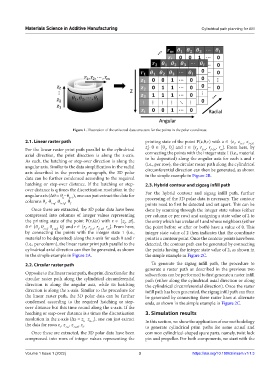
                                Figure 1. Illustration of the universal data structure for the points in the polar coordinate.

            2.1. Linear raster path                            printing state of the point P(z,θ,r) with z ∈ {z , z , z 1+2s ,
                                                                                                     1
                                                                                                       1+s
            For the linear raster print path parallel to the cylindrical   z } θ ∈ [θ ,  θ] and r ∈ {r , r , r f+2n , r }. From here, by
                                                                                               m
                                                                       1
                                                                                     f
                                                                                       f+n
                                                                t
                                                                          l
            axial direction, the print direction is along the z-axis.   connecting the points with the integer state 1 (i.e., material
            As such, the hatching or step-over direction is along the   to be deposited) along the angular axis for each z and r
                                                               (i.e., per row), the circular raster path along the cylindrical
            angular axis. Similar to the data simplification in the radial   circumferential direction can then be generated, as shown
            axis described in the previous paragraph, the 3D polar   in the simple example in Figure 2B.
            data can be further condensed according to the required
            hatching or step-over distance. If the hatching or step-  2.3. Hybrid contour and zigzag infill path
            over distance is q times the discretization resolution in the   For the hybrid contour and zigzag infill path, further
            angular axis (Δθ = θ −θ ), one can just extract the data for   processing of the 3D polar data is necessary. The contour
                              k−1
                            k
            columns θ , θ , θ  , θ.
                    1  1+q  1+2q  l                            points need to first be detected and set apart. This can be
              Once these are extracted, the 3D polar data have been   done by scanning through the integer state values (either
            compressed into columns of integer values representing   per column or per row) and assigning a state value of 2 to
            the  printing  state  of the point P(z,θ,r)  with z  ∈  [z , zt],   the entry which has a value of 1 and whose neighbors (either
                                                      1
            θ ∈ {θ , θ , θ  , θ} and r ∈ {r , r , r f+2n , r }. From here,   the point before or after or both) have a value of 0. This
                 1   1+q   1+2q
                                     f
                            l
                                       f+n
                                               m
            by connecting the points with the integer state 1 (i.e.,   integer state value of 2 then indicates that the coordinate
            material to be deposited) along the z-axis for each θ and r   point is a contour point. Once the contour points have been
            (i.e., per column), the linear raster print path parallel to the   detected, the contour path can be generated by connecting
            cylindrical axial direction can then be generated, as shown   the points having the integer state value of 2, as shown in
            in the simple example in Figure 2A.                the simple example in Figure 2C.
            2.2. Circular raster path                            To generate the zigzag infill path, the procedure to
                                                               generate a raster path as described in the previous two
            Opposite to the linear raster path, the print direction for the   subsections can be performed to first generate a raster infill
            circular raster path along the cylindrical circumferential   path (either along the cylindrical axial direction or along
            direction is along the angular axis, while its hatching   the cylindrical circumferential direction). Once the raster
            direction is along the z-axis. Similar to the procedure for   infill path has been generated, the zigzag infill path can then
            the linear raster path, the 3D polar data can be further   be generated by connecting these raster lines at alternate
            condensed according to the required hatching or step-  ends, as shown in the simple example in Figure 2C.
            over distance but this time round along the z-axis. If the
            hatching or step-over distance is s times the discretization   3. Simulation results
            resolution in the z-axis (Δz = z −z ), one can just extract   In this section, we show the application of our methodology
                                       h−1
                                    h
            the data for rows z , z , z  , z .
                           1  1+s  1+2s  t                     to generate cylindrical print paths for some actual and
              Once these are extracted, the 3D polar data have been   common cylindrical-shaped spare parts, namely, twist lock
            compressed into rows of integer values representing the   pin and propeller. For both components, we start with the
            Volume 1 Issue 1 (2022)                         3                      https://doi.org/10.18063/msam.v1i1.3

