


Page 18 - MSAM-2-2
P. 18
Materials Science in Additive Manufacturing                        Union of 2D nanomaterials and 3D printing


                         A                                          B


                         C                                     D


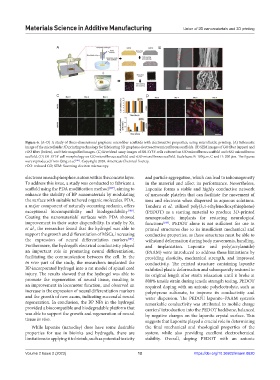
            Figure 6. (A–D) A study of three-dimensional graphene microfiber scaffolds with electroactive properties, using microfluidic printing. (A) Schematic
            image of the microfluidic 3D printing technology for fabricating 3D graphene electroactive microfibrous scaffolds. (B) SEM images of GO fiber (upper) and
            rGO fiber (below), and their magnified images. (C) Live/dead assay images of SH-SY5Y cells cultured on GO microfibrous scaffold and rGO microfibrous
            scaffold. (D) SH-SY5Y cell morphology on GO microfibrous scaffold and rGO microfibrous scaffold. Scale bars: B: 100 μm, C and D: 200 μm. The figures
            were reproduced from Qing et al. [105] . Copyright 2020, American Chemical Society.
            rGO: reduced GO; SEM: Scanning electron microscopy.

            electrons on each phosphorus atom within the concave layer.   and particle aggregation, which can lead to inhomogeneity
            To address this issue, a study was conducted to fabricate a   in the material and affect its performance. Nevertheless,
            scaffold using the PDA modification method [107] , aiming to   Laponite forms a stable and highly conductive network
            enhance the stability of BP nanomaterials by modulating   of nanoscale platelets that can facilitate the movement of
            the surface with suitable tethered organic molecules. PDA,   ions and electrons when dispersed in aqueous solutions.
            a major component of naturally occurring melanin, offers   Tondera  et al. utilized poly(3,4-ethylenedioxythiophene)
            exceptional biocompatibility  and  biodegradability [108] .   (PEDOT)  as  a  starting  material  to  produce  3D-printed
            Coating the nanomaterials’ surfaces with PDA showed   neuroprosthetic implants for restoring neurological
            improvement in their water dispersibility. In study by Xu   functions [109] . PEDOT alone  is  not  sufficient  for use in
            et al., the researcher found that the hydrogel was able to   printed structures due to its insufficient mechanical and
            support the growth and differentiation of MSCs, increasing   conductive properties, as these structures must be able to
            the expression of neural differentiation markers [107] .   withstand deformation during body movements, handling,
            Furthermore, the hydrogel’s electrical conductivity played   and implantation. Laponite and poly(acrylamide)
            an important role in promoting neural differentiation,   (PAAM) were introduced to address these limitations by
            facilitating the communication between the cell. In the   providing elasticity, mechanical strength, and improved
            in vivo part of the study, the researchers implanted the   conductivity. The printed structure containing laponite
            BP-incorporated hydrogel into a rat model of spinal cord   exhibited plastic deformation and subsequently restored to
            injury. The results showed that the hydrogel was able to   its original length after strain relaxation until it broke at
            promote the regeneration of neural tissue, resulting in   800% tensile strain during tensile strength testing. PEDOT
            an improvement in locomotor function, and observed an   required doping with an anionic polyelectrolyte, such as
            increase in the expression of neural differentiation markers   polystyrene sulfonate, to improve its conductivity and
            and the growth of new axons, indicating successful neural   water dispersion. The PEDOT:  laponite–PAAM system’s
            regeneration. In conclusion, the BP NPs in the hydrogel   remarkable conductivity was attributed to mobile charge
            provided a biocompatible and biodegradable platform that   carriers’ introduction into the PEDOT backbone, balanced
            was able to support the growth and regeneration of neural   by negative charges on the laponite crystal surface. This
            tissue in vivo.                                    suggests that Laponite played a crucial role in determining
              While laponite (nanoclay) does have some desirable   the final mechanical and rheological properties of the
            properties for use in bioinks and hydrogels, there are   system, while also providing excellent electrochemical
            limitations to applying it to bioink, such as potential toxicity   stability. Overall, doping PEDOT with an anionic


            Volume 2 Issue 2 (2023)                         12                      https://doi.org/10.36922/msam.0620

