


Page 16 - MSAM-2-2
P. 16
Materials Science in Additive Manufacturing                        Union of 2D nanomaterials and 3D printing


                         A                                   D


                                                             E


                         B                C                   F


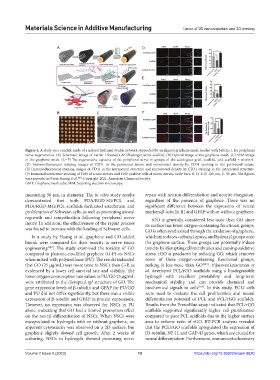
            Figure 4. A study on a conduit made of a natural hydrogel double network supported by an aligned graphene mesh, loaded with Netrin-1, for peripheral
            nerve regeneration. (A) Schematic image of netrin-1-loaded GMT/hydrogel nerve scaffold. (B) Optical image of the graphene mesh. (C) SEM image
            of the graphene mesh. (D–F) The regenerative capacity of the peripheral nerve in groups of the autologous graft, scaffold, and scaffold + netrin-1.
            (D) Immunofluorescent staining images of CD31 in the perineural suture and microvessel density by CD31 staining in the perineural suture.
            (E) Immunofluorescent staining images of CD31 in the intraneural structure and microvessel density by CD31 staining in the intraneural structure.
            (F) Immunofluorescence staining of S100 of sciatic nerves and S100 positive cells of sciatic nerves. Scale bars: B, D, E, F: 100 μm, C: 50 μm. The figures
            were reproduced from Huang et al. . Copyright 2021, American Chemical Society.
                                  [88]
            GMT: Graphene mesh tube; SEM: Scanning electron microscopy.
            measuring 50 μm in diameter. The in vitro study results   repair with neuron differentiation and neurite elongation,
            demonstrated that  both PDA/RGD-SG/PCL  and        regardless of the presence of  graphene. There was no
            PDA/RGD-MG/PCL scaffolds facilitated attachment and   significant difference between the expression of neural
            proliferation of Schwann cells, as well as promoting axonal   markers β-tubulin III and GFAP with or without graphene.
            regrowth and remyelination following peripheral nerve   rGO is generally considered less toxic than GO since
            injury. In addition, the effectiveness of the repair process   its surface has fewer oxygen-containing functional groups.
            was found to increase with the loading of Schwann cells.  GO is often synthesized through the oxidation of graphene,
              In a study by Huang  et  al.,  graphene and GO-added   which introduces carboxyl, epoxy, and hydroxyl groups onto
            bioink were compared for their toxicity in nerve tissue   the graphene surface. These groups can potentially induce
            engineering [102] . The study examined the toxicity of GO   toxicity by disrupting cell membranes and causing oxidative
            compared to pluronic-modified graphene (G-P) on NSCs   stress. rGO is produced by reducing GO, which removes
            when mixed with polyurethane (PU). The results indicated   some of these oxygen-containing functional groups,
            that GO (25 μg/mL) was more toxic to NSCs than G-P, as   making it less toxic than GO [103] . Vijayavenkataraman  et
            evidenced by a lower cell survival rate and viability. The   al. developed PCL/rGO scaffolds using a biodegradable
            lower oxygen consumption rate values in PU/GO 25 μg/mL   hydrogel with excellent printability and long-term
            were attributed to the disrupted sp  structure of GO. The   mechanical stability and can provide chemical and
                                        2
            gene expression levels of β-tubulin and GFAP for PU/GO   biochemical signals to cells [104] . In this study, PC12  cells
            and PU did not differ significantly, but there was a visible   were used to evaluate the cell proliferation and neural
            expression of β-tubulin and GFAP in protein expressions.   differentiation potential of PCL and PCL/rGO scaffolds.
            However, no expression was observed for NSCs in PU   Results from the PrestoBlue assay indicated that PCL/rGO
            alone, indicating that GO had a limited promotion effect   scaffolds supported significantly higher cell proliferation
            on the neural differentiation of NSCs. When NSCs were   compared to pure PCL scaffolds due to the higher surface
            encapsulated in hydrogels with or without graphene, no   area  to volume  ratio  of rGO.  RT-PCR  analysis revealed
            apparent cytotoxicity was observed on a 2D surface, but   that the PCL/rGO scaffolds upregulated the expression of
            graphene slightly slowed cell growth. After 2  weeks of   β3-tubulin, NF-H, and GAP-43 genes, which are crucial for
            culturing, NSCs in hydrogels showed promising nerve   neural differentiation. Furthermore, immunocytochemistry


            Volume 2 Issue 2 (2023)                         10                      https://doi.org/10.36922/msam.0620

