


Page 13 - MSAM-2-2
P. 13
Materials Science in Additive Manufacturing                        Union of 2D nanomaterials and 3D printing


             A                C                       D                              E


             B


             F                 H                           I                       J


             G


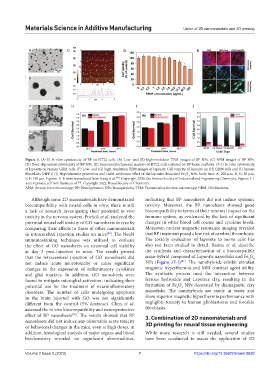
            Figure 3. (A–E) In vitro cytotoxicity of BP on HT22 cells. (A) Low- and (B) high-resolution TEM images of BP NPs. (C) AFM images of BP NPs.
            (D) Dose-dependent cytotoxicity of BP NPs. (E) Immunocytochemical analysis of HT22 cells cultured on BP-laden scaffolds. (F–J) In vitro cytotoxicity
            of laponite on human GBM cells. (F) Low- and (G) high-resolution TEM images of laponite. Cell toxicity of laponite on (H) GBM cells and (I) human
            fibroblasts (HFF1) (J) Hyperthermia generation and GBM antitumor effect of the laponite-decorated Fe O  NPs. Scale bars: A: 200 μm, B, G: 50 μm,
                                                                                 4
                                                                                3
                                                  [79]
            E, F: 100 μm. Figures  A–E were reproduced from Kang et al. . Copyright 2020, the Korean Society of Industrial and Engineering Chemistry. Figures F–J
            were reproduced from Basina et al. . Copyright 2022, Royal Society of Chemistry.
                                  [81]
            AFM: Atomic force microscopy; BP: Blood pressure; NPs: Nanoparticles; TEM: Transmission electron microscopy; GBM: Glioblastoma.
              Although some 2D nanomaterials have demonstrated   indicating that BP nanosheets did not induce systemic
            biocompatibility with neural cells  in vitro, there is still   toxicity. Moreover, the BP nanosheets showed good
            a lack of research investigating their potential  in vivo   biocompatibility in terms of their minimal impact on the
            toxicity in the nervous system. Portioli et al. analyzed the   immune system, as evidenced by the lack of significant
            potential neural cell toxicity of GO nanosheets in vivo by   changes in white blood cell counts and cytokine levels.
            comparing their effects to those of other nanomaterials   Moreover, nuclear magnetic resonance imaging revealed
            in intracerebral injection studies on mice . The NeuN   that BP treatment posed a low risk of cerebral thrombosis.
                                              [80]
            immunostaining  technique  was  utilized  to  evaluate   The toxicity evaluation of laponite to nerve cells has
            the  effect of  GO nanosheets  on neuronal  cell  viability   also  not  been  studied  in  detail.  Basina  et al.  describe
            at day 2 post-injection in mice. The results proved   the synthesis and characterization of a biocompatible
            that the intracerebral injection of GO nanosheets did   nano-hybrid composed of Laponite nanodisks and Fe O
                                                                                                             4
                                                                                                           3
                                                                              [81]
            not induce acute neurotoxicity or cause significant   NPs (Figure  3F-J) . The nanohybrids exhibit ultrafast
            changes in the expression of inflammatory cytokines   magnetic hyperthermia and MRI contrast agent ability.
            and glial markers. In addition, GO nanosheets were   The synthetic process  used the interaction between
            found to mitigate microglial activation, indicating their   ferrous  hydroxide  and  Laponite  clay,  resulting  in  the
            potential  use for  the treatment of  neuroinflammatory   formation of Fe O  NPs decorated by diamagnetic clay
                                                                            3
                                                                              4
            disorders. The number of cells undergoing apoptosis   nanodisks. The nanohybrids are stable in water and
            in the brain injected with GO was not significantly   show superior magnetic hyperthermia performance with
            different from the control (5% dextrose). Chen  et  al.   negligible toxicity to human glioblastoma and foreskin
            assessed the in vivo biocompatibility and neuroprotective   fibroblasts.
            effect of BP nanosheets . The results showed that BP   3. Combination of 2D nanomaterials and
                                [76]
            nanosheets did not induce any observable acute toxicity
            or behavioral changes in the mice, even at high doses. In   3D printing for neural tissue engineering
            addition, histological analysis of major organs and blood   While more research is still needed, several studies
            biochemistry revealed no significant abnormalities,   have been conducted to assess the application of 2D


            Volume 2 Issue 2 (2023)                         7                       https://doi.org/10.36922/msam.0620

