


Page 11 - MSAM-2-2
P. 11
Materials Science in Additive Manufacturing                        Union of 2D nanomaterials and 3D printing


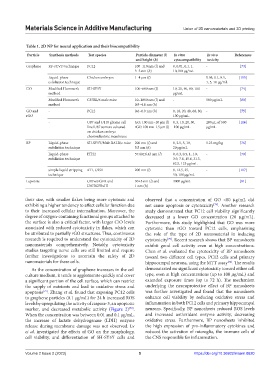
            Table 1. 2D NP for neural application and their biocompatibility
             Particle  Synthesis methods  Test species     Particle diameter (l)   In vitro   In vivo   References
                                                           and height (h)  cytocompatibility  toxicity
            Graphene  RF-cCVD technique  PC12             100–110 nm (l) and   0, 0.01, 0.1, 1,   -    [73]
                                                          3–5 nm (h)       10,100 μg/mL
                      Liquid-phase    Chicken embryos     1–4 μm (l)       -             0.05, 0.1, 0.5,   [115]
                      exfoliation technique                                              1, 5, 10 μg/mL
            GO        Modified Hummer’s   SH-SY5Y         100–600 nm (l)   10, 20, 40, 80, 100   -     [74]
                      method                                               μg/mL
                      Modified Hummer’s   C57BL/6 male mice  10–1800 nm (l) and   -      500 μg/mL     [80]
                      method                              0.9–4.8 nm (h)
            GO and    -               PC12                0.6–0.9 nm (h)   0, 10, 20, 40, 60, 80,  -   [75]
            rGO                                                            100 μg/mL
                      -               U87 and U118 glioma cell   GO: 100 nm–10 μm (l)  0, 5, 10, 20, 50,   200 μL of 500   [116]
                                      line/U87 tumors cultured   rGO: 100 nm–1.5 μm (l)  100 μg/mL  μg/mL
                                      on chicken embryo
                                      chorioallantoic membrane
            BP        Liquid-phase    SH-SY5Y/Male BALB/c mice  200 nm (l) and   0, 2.5, 5, 10,   5.25 mg/kg  [76]
                      exfoliation technique               5.5 nm (h)       20 μg/mL
                      Liquid-phase    HT22                57.60±6.43 nm (l)  0, 0.3, 0.5, 1, 1.9,   -  [79]
                      exfoliation technique                                3.9, 7.8, 15.6, 31.3,
                                                                           62.5, 125 μg/mL
                      simple liquid stripping   4T1, U251  200 nm (l)      0, 12.5, 25,   -            [117]
                      technique                                            50, 100 μg/mL
            Laponite  -               U87wtEGFR and       30±5 nm (l) and   3000 μg/mL   -             [81]
                                      U87EGFRvIII         1 nm (h)

            their size, with smaller flakes being more cytotoxic and   observed that a concentration of GO <80  μg/mL did
            exhibiting a higher tendency to affect cellular function due   not cause apoptosis or cytotoxicity . Another research
                                                                                            [74]
            to their increased cellular internalization. Moreover, the   study demonstrated that PC12 cell viability significantly
            degree of oxygen-containing functional groups attached to   decreased at a lower GO concentration (20  μg/mL).
            the surface is also a critical factor, with larger C/O levels   Furthermore, this study highlighted that GO was more
            associated with reduced cytotoxicity in flakes, which can   cytotoxic than rGO toward PC12  cells, emphasizing
            be attributed to partially rGO structures. Thus, continuous   the role of the type of 2D nanomaterial in inducing
            research is required to understand the cytotoxicity of 2D   cytotoxicity . Recent research shows that BP nanosheets
                                                                        [75]
            nanomaterials comprehensively. Notably, cytotoxicity   exhibit good cell activity even at high concentrations.
            studies targeting nerve cells are still limited and require   Chen  et al. evaluated the cytotoxicity of BP  nanosheets
            further investigations to ascertain the safety of 2D   toward two different cell types, PC12  cells and primary
            nanomaterials for these cells.                     hippocampal neurons, using the MTT assay . The results
                                                                                                  [76]
              As the concentration of graphene increases in the cell   demonstrated no significant cytotoxicity toward either cell
            culture medium, it tends to agglomerate quickly and cover   type, even at high concentrations (up to 100 μg/mL) and
            a significant portion of the cell surface, which can restrict   extended exposure times (up to 72  h). The mechanism
            the supply of nutrients and lead to oxidative stress and   underlying the neuroprotective effect of BP nanosheets
            apoptosis . Zhang et al. found that exposing PC12 cells   was further investigated and found that the nanosheets
                   [72]
            to graphene particles (0.1 μg/mL) for 24 h increased ROS   enhance cell viability by reducing oxidative stress and
            levels by upregulating the activity of caspase-3, an apoptotic   inflammation in both PC12 cells and primary hippocampal
            marker, and decreased metabolic activity (Figure  2) .   neurons.  Specifically, BP  nanosheets  reduced  ROS levels
                                                        [73]
            When the concentration was between 0.01 and 0.1 μg/mL,   and  increased  antioxidant  enzyme  activity,  decreasing
            the increase of lactate dehydrogenase (LDH) enzyme   oxidative stress. Furthermore, BP nanosheets inhibited
            release during membrane damage was not observed. Lv   the  high  expression  of pro-inflammatory  cytokines  and
            et al. investigated the effects of GO on the morphology,   reduced the activation of microglia, the immune cells of
            cell viability, and differentiation of SH-SY5Y cells and   the CNS responsible for inflammation.


            Volume 2 Issue 2 (2023)                         5                       https://doi.org/10.36922/msam.0620

