


Page 14 - MSAM-2-2
P. 14
Materials Science in Additive Manufacturing                        Union of 2D nanomaterials and 3D printing


            nanomaterials in bioink for nerve tissue regeneration   critical role in nerve regeneration by promoting axonal
            with 3D printing (Table 2). Zhu et al. synthesized hydrogel   growth and guidance, as well as in the production
            from gelatin methacrylamide and graphene nanoplatelets   of ECM molecules and growth factors that support
            (G-GelMA) [82] . Evaluating the cytotoxicity of the GelMA   nerve regeneration [83,84] . This multipronged activity of
            bioink incorporated with 1000 μg/mL of graphene, no   Schwann cells makes them an attractive target for tissue
            apparent cytotoxicity was observed  compared to pure   engineering research aimed at the regeneration and
                                                                                     [85]
            GelMA bioink, but the cells proliferated with incubation   repair of peripheral nerves . Uz et al. used 3D printing
            time. Both hydrogels expressed abundant β-tubulin III   to fabricate nerve regeneration conduits/scaffolds made
            instead of GFAP, promoting differentiation of NSCs.  of gelatin and graphene with tailored 3D microstructures
                                                               and mechanical properties . The study investigated how
                                                                                    [86]
              Schwann cells have emerged as a promising research   the microstructure of gelatin-based 3D scaffolds and
            target for neural tissue engineering, particularly in nerve   electrical stimuli affected mesenchymal stem cell (MSC)
            regeneration. As a type of glial cell localized to the PNS,   behavior and their transdifferentiation into Schwann cell-
            Schwann cells are responsible for providing both physical   like phenotypes. The gelatin-based 3D scaffolds exhibited
            and metabolic support to neurons. Schwann cells play a   favorable properties for MSC attachment and growth, and


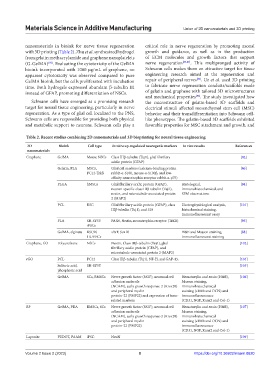
            Table 2. Recent studies combining 2D nanomaterials and 3D bioprinting for neural tissue engineering
             2D           Bioink      Cell type  In vitro up-regulated neurogenic markers  In vivo results  References
             nanomaterials
            Graphene      GelMA       Mouse NSCs  Class IIIβ-tubulin (Tuj1), glial fibrillary          [82]
                                                acidic protein (GFAP)
                          Gelatin, PLA  MSCs,   Glial cell markers (calcium-binding protein            [86]
                                      PC12-TrkB  rabbit-α-S100, mouse-α-S100β, and low-
                                                affinity neurotrophin receptor rabbit-α-p75)
                          PLGA        hMSCs     Glial fibrillary acidic protein (GFAP),   Histological,   [94]
                                                neuron-specific class IIIβ-tubulin (Tuj1),   immunohistochemical, and
                                                nestin, and microtubule-associated protein   SEM observations.
                                                2 (MAP2)
                          PCL         RSC       Glial fibrillary acidic protein (GFAP), class   Electrophysiological analysis,   [101]
                                                IIIβ-tubulin (Tuj1), and S10  histochemical staining,
                                                                              immunofluorescent assay
                          PLA         SH-SY5Y   PAX6, Nestin, neurotrophin receptor (TrKB)             [93]
                                      iPSCs
                          GelMA, alginate  RSC96  vWF, Sox10                  H&E and Masson staining,   [88]
                                      HUVECs                                  immunofluorescent staining
            Graphene, GO  Polyurethane  NSCs    Nestin, Class IIIβ-tubulin (Tuj1), glial               [102]
                                                fibrillary acidic protein (GFAP), and
                                                microtubule-associated protein 2 (MAP2)
            rGO           PCL         PC12      Class IIIβ-tubulin (Tuj1), NF-H, and GAP-43,           [104]
                          Sulfuric acid,   SH-SY5Y                                                     [105]
                          phosphoric acid
                          GelMA       SCs, BMSCs  Nerve growth factor (NGF), neuronal cell   Hematoxylin and eosin (H&E),   [106]
                                                adhesion molecule             Masson staining,
                                                (NCAM), early growth response-2 (Krox20)  immunohistochemical
                                                and peripheral myelin         staining (s100b and OCN) and
                                                protein-22 (PMP22) and expression of bone- immunofluorescence
                                                related markers               (CD31, NGF, Runx2 and Col-1)
            BP            GelMA, PDA  BMSCs, SCs  Nerve growth factor (NGF), neuronal cell   Hematoxylin and eosin (H&E),   [107]
                                                adhesion molecule             Masson staining,
                                                (NCAM), early growth response-2 (Krox20)  immunohistochemical
                                                and peripheral myelin         staining (s100b and OCN) and
                                                protein-22 (PMP22)            immunofluorescence
                                                                              (CD31, NGF, Runx2 and Col-1)
            Laponite      PEDOT, PAAM  iPSC     NeuN                                                   [109]


            Volume 2 Issue 2 (2023)                         8                       https://doi.org/10.36922/msam.0620

