


Page 32 - OR-1-1
P. 32
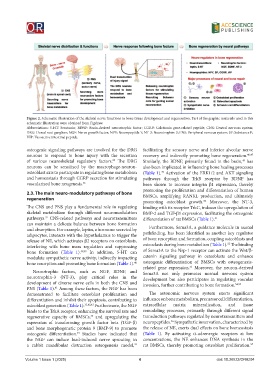
Figure 2. Schematic illustration of the skeletal nerve functions in bone tissue development and regeneration. Part of the graphic materials used in this
            schematic illustration were obtained from Figdraw.
            Abbreviations: 5-HT: Serotonin; BDNF: Brain-derived neurotrophic factor; CGRP: Calcitonin gene-related peptide; CNS: Central nervous system;
            DRG: Dorsal root ganglion; NGF: Nerve growth factor; NPY: Neuropeptide Y; NT-3: Neurotrophin-3; PNS: Peripheral nervous system; SP: Substance P;
            VIP: Vasoactive intestinal peptide.

            osteogenic signaling pathways are involved for the DRG   facilitating  the  sensory  nerve  and  inferior  alveolar  nerve
            neurons to respond to bone injury with the secretion   recovery and indirectly promoting bone regeneration. 46,47
                                                 35
            of various neuroskeletal regulatory factors.  The DRG   Similarly, the BDNF, primarily found in the brain,  has
                                                                                                        48
            neurons  can  be sensitized  by the  macrophage-neuron-  also been implicated in influencing bone healing processes
            osteoblast axis to participate in regulating bone metabolism   (Table 1).  Activation of the ERK1/2 and AKT signaling
                                                                      49
            and homeostasis through CGRP secretion for stimulating   pathways through the TrkB receptor by BDNF has
            vascularized bone neogenesis. 36                  been shown to increase integrin  β1 expression, thereby
                                                              promoting the proliferation and differentiation of human
            2.3. The main neuro-modulatory pathways of bone   BMSCs,  amplifying  RANKL  production,  and  ultimately
            regeneration
                                                              promoting osteoblast growth.  Moreover, the NT-3,
                                                                                        50
            The CNS and PNS play a fundamental role in regulating   binding with its receptor TrkC, induces the upregulation of
            skeletal metabolism through different neuromodulation   BMP-2 and TGF-β1 expression, facilitating the osteogenic
            pathways.  CNS-related pathways and neurotransmitters   differentiation of rat BMSCs (Table 1). 51
                    37
            can maintain a delicate balance between bone formation
            and absorption. For example, leptin, a hormone secreted by   Furthermore, Sema3A, a guidance molecule in axonal
            adipocytes, interacts with the hypothalamus to trigger the   pathfinding, has been identified as another key regulator
            release of NE, which activates β2 receptors on osteoblasts,   of bone resorption and formation, coupling osteoblasts and
                                                                                                  52
            interfering with bone mass regulation and suppressing   osteoclasts during bone metabolism (Table 1).  The binding
            bone formation (Table  1). 38,39  In addition, 5-HT can   of Sema3A to the Nrp-1 receptor can activate the Wnt/β-
            modulate sympathetic nerve activity, indirectly impacting   catenin signaling pathway in osteoblasts and enhance
            bone resorption and promoting bone formation (Table 1). 40  osteogenic differentiation of BMSCs with osteogenesis-
                                                              related gene expression.  Moreover, the neuron-derived
                                                                                  53
               Neurotrophic factors, such as NGF, BDNF, and   Sema3A  not  only promotes normal nervous system
            neurotrophin-3 (NT-3), play critical roles in the   development but also participates in regulating vascular
            development of diverse nerve cells in both the CNS and   invasion, further contributing to bone formation. 54,55
                        41
            PNS (Table 1).  Among these factors, the NGF has been
            demonstrated to facilitate osteoblast proliferation and   The autonomic nervous system exerts significant
            differentiation and inhibit their apoptosis, contributing to   influence on bone metabolism, precursor cell differentiation,
            osteoblast generation (Table 1). 33,42,43  Furthermore, the NGF   extracellular  matrix  mineralization,  and  tissue
            binds to the TrkA receptor, enhancing the survival rate and   remodeling processes, primarily through different signal
            regenerative capacity of BMSCs,  and upregulating the   transduction pathways regulated by neurotransmitters and
                                        44
                                                                          56
            expression of transforming growth factor  beta (TGF-β)   neuropeptides.  Sympathetic innervation, characterized by
            and bone morphogenetic protein 9 (BMP-9) to promote   the release of NE, exerts dual effects on bone homeostasis
            osteogenic differentiation.  Studies have indicated that   (Table  1). By activating  α-adrenergic receptors at low
                                  45
            the  NGF  can  induce  load-induced  nerve  sprouting  in   concentrations, the NE enhances DNA synthesis in the
            a rabbit mandibular distraction osteogenesis model,    rat BMSCs, thereby promoting osteoblast proliferation.
                                                                                                            57
                                                          33
            Volume 1 Issue 1 (2025)                         4                                doi: 10.36922/OR8294

