


Page 33 - OR-1-1
P. 33
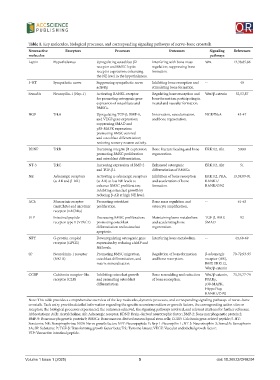
Table 1. Key molecules, biological processes, and corresponding signaling pathways of nerve–bone crosstalk
             Neuroactive     Receptors            Processes              Outcomes         Signaling   References
             molecules                                                                    pathways
             Leptin     Hypothalamus      Upregulating osteoblast β2   Interfering with bone mass   Wnt  13,38,85,86
                                          receptor and BMSC leptin   regulation; suppressing bone
                                          receptor expression; enhancing   formation.
                                          the NE level in the hypothalamus.
             5-HT       Sympathetic nerve  Suppressing sympathetic nerve   Inhibiting bone resorption and   --  40
                                          activity.               stimulating bone formation.
             Sema3A     Neuropilin-1 (Nrp-1)  Activating RANKL receptor   Regulating bone resorption and   Wnt/β-catenin  52,53,87
                                          for promoting osteogenic gene   bone formation; participating in
                                          expression of osteoblasts and   neural and vascular formation.
                                          BMSCs.
             NGF        TrkA              Upregulating TGF-β, BMP-9,   Innervation, vascularization,   NGF/TrkA  43-47
                                          and VEGF gene expression;   and bone regeneration.
                                          suppressing SMAD and
                                          p38-MAPK expression;
                                          promoting BMSC survival
                                          and osteoblast differentiation;
                                          restoring sensory neuron activity.
             BDNF       TrkB              Increasing integrin β1 expression;   Bone fracture healing and bone   ERK1/2, Akt  50,88
                                          promoting BMSC proliferation   regeneration.
                                          and osteoblast differentiation.
             NT-3       TrkC              Increasing expression of BMP-2   Enhanced osteogenic   ERK1/2, Akt  51
                                          and TGF-β1.             differentiation of BMSCs.
             NE         Adrenergic receptors   Activating α-adrenergic receptors   Inhibition of bone resorption   ERK1/2, PKA,   13,59,89-91
                        (α-AR and β-AR)   (α-AR) at low NE levels to   and acceleration of bone   RANKL/
                                          enhance BMSC proliferation;   formation.      RANK/OPG
                                          inhibiting osteoclast growth by
                                          reducing β-AR at high NE level.
             ACh        Muscarinic receptor   Promoting osteoblast   Bone mass regulation and   --    61-63
                        (mAChRs) and nicotinic   proliferation.   osteocyte amplification.
                        receptor (nAChRs)
             VIP        Intestinal peptide   Decreasing BMSC proliferation;   Maintaining bone metabolism   TGF-β, BMP,   92
                        receptor type 1 (VPAC1)  promoting osteoblast   and accelerating bone   SMAD
                                          differentiation and osteoclast   regeneration.
                                          apoptosis.
             NPY        G-protein coupled   Downregulating osteogenic gene   Interfering bone metabolism.  --  65,68-69
                        receptor (GPCR)   expression by reducing cAMP and
                                          NE levels.
             SP         Neurokinin-1 receptor   Promoting BMSC migration,   Regulation of bone formation   β-adrenergic   70-72,93-95
                        (NK1R)            osteoblast differentiation, and   and bone resorption.  receptor (AR),
                                          matrix mineralization.                        BMP, ERK1/2,
                                                                                        Wnt/β-catenin
             CGRP       Calcitonin receptor-like   Inhibiting osteoclast growth   Bone remodeling and reduction   Wnt/β-catenin,   75,76,77-79
                        receptor (CLR)    and promoting osteoblast   of bone resorption.  PPARγ,
                                          differentiation.                              p38-MAPK,
                                                                                        Hippo/Yap,
                                                                                        RANKL/OPG
             Note: This table provides a comprehensive overview of the key molecules, dynamic processes, and corresponding signaling pathways of nerve–bone
             crosstalk. Each entry provides detailed information regarding the specific neurotransmitters or growth factors, the corresponding action sites or
             receptors, the biological processes experienced, the outcomes achieved, the signaling pathways involved, and relevant citations for further reference.
             Abbreviations: ACh: Acetylcholine; AR: Adrenergic receptor; BDNF: Brain-derived neurotrophic factor; BMP-2: Bone morphogenetic protein 2;
             BMP-9: Bone morphogenetic protein 9; BMSCs: Bone marrow-derived mesenchymal stem cells; CGRP: Calcitonin gene-related peptide; 5-HT:
             Serotonin; NE: Norepinephrine; NGF: Nerve growth factor; NPY: Neuropeptide Y; Nrp-1: Neuropilin-1; NT-3: Neurotrophin-3; Sema3A: Semaphorin
             3A; SP: Substance P; TGF-β: Transforming growth factor beta; Trk: Tyrosine kinase; VEGF: Vascular endothelial growth factor;
             VIP: Vasoactive intestinal peptide.


            Volume 1 Issue 1 (2025)                         5                                doi: 10.36922/OR8294

