


Page 129 - OR-1-2
P. 129
A                                 B                                C


             D                                                E


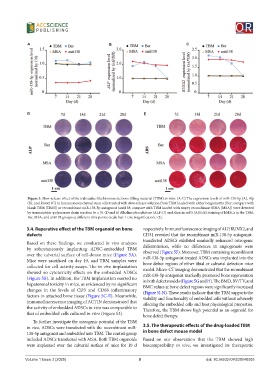
             Figure 3. Slow-release effect of the trabeculae-like biomimetic bone-filling material (TBM) in vitro. (A-C) The expression levels of miR-138-5p (A), Alp
             (B), and Runx2 (C) in human mesenchymal stem cells treated with slow-release solution from TBM loaded with either bergamottin (Ber; compare with
             blank TBM [TBM]) or recombinant miR-138-5p antagonist (anti138; compare with TBM loaded with empty recombinant tRNA [MSA]) were detected
             by transcription-polymerase chain reaction (n = 3). (D and E) Alkaline phosphatase (ALP; D) and alizarin red S (ARS; E) staining of hMSCs in the TBM,
             Ber, MSA, and anti138 groups at different time points (scale bar: 1 cm; magnification: ×2).

            3.4. Reparative effect of the TBM organoid on bone   respectively. Immunofluorescence imaging of ALP, RUNX2, and
            defects                                           CD31 revealed that the recombinant miR-138-5p antagonist-
                                                              transfected ADSCs exhibited markedly enhanced osteogenic
            Based on these findings, we conducted  in vivo analyzes
            by subcutaneously implanting ADSC-embedded TBM    differentiation, while no differences in angiogenesis were
            over the calvarial surface of cell-donor mice (Figure 5A).   observed (Figure 5F). Moreover, TBM containing recombinant
                                                              miR-138-5p antagonist-treated ADSCs was implanted into the
            Mice were sacrificed on day 10, and TBM samples were
            collected for cell activity assays. The in vivo implantation   bone defect regions of either tibial or calvarial defection mice
                                                              model. Micro-CT imaging demonstrated that the recombinant
            showed no cytotoxicity effects on the embedded ADSCs   miR-138-5p antagonist markedly promoted bone regeneration
            (Figure 5B). In addition, the TBM implantation exerted no   in both defect models (Figure 5G and H). The BMD, BV/TV, and
            hepatorenal toxicity in mice, as evidenced by no significant   BMC values at bone defect regions were significantly increased
            changes in the levels of CD3 and CD68 inflammatory   (Figure 5I-N). These results indicate that the TBM supports the
            factors in attached bone tissue (Figure 5C-E). Meanwhile,   viability and functionality of embedded cells without adversely
            immunofluorescence imaging of ACTIN demonstrated that   affecting the embedded cells and host physiological properties.
            the activity of embedded ADSCs in vivo was comparable to   Therefore, the TBM shows high potential as an organoid for
            that of embedded cells cultured in vitro (Figure S3).
                                                              bone defect therapy.
               To further investigate the osteogenic potential of the TBM
            in vivo, ADSCs were transfected with the recombinant miR-  3.5. The therapeutic effects of the drug-loaded TBM
            138-5p antagonist and embedded into TBM. The control group   in bone defect mouse model
            included ADSCs transfected with MSA. Both TBM organoids   Based on our observation that the TBM showed high
            were implanted over the calvarial surface of mice for 10 d   biocompatibility  in vivo, we investigated its therapeutic


            Volume 1 Issue 2 (2025)                         9                            doi: 10.36922/OR025040003

