


Page 128 - OR-1-2
P. 128
A                                    B


                         C                             D             E


                         F                                    G


                         H                                    I


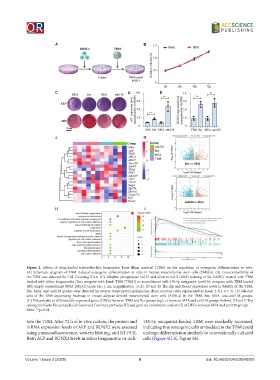
            Figure  2. Effects of drug-loaded trabeculae-like biomimetic bone-filling material (TBM) on the regulation of osteogenic differentiation  in vitro.
            (A) Schematic diagram of TBM-induced osteogenic differentiation  in vitro in human mesenchymal stem cells (hMSCs). (B) Cytocompatibility of
            the TBM was detected by Cell Counting Kit-8. (C) Alkaline phosphatase (ALP) and alizarin red S (ARS) staining of the hMSCs treated with TBM
            loaded with either bergamottin (Ber; compare with blank TBM [TBM]) or recombinant miR-138-5p antagonist (anti138; compare with TBM loaded
            with empty recombinant tRNA [MSA]) (scale bar: 1 cm; magnification: ×1.4). (D and E) The Alp and Runx2 expression levels in hMSCs of the TBM,
            Ber, MSA, and anti138 groups were detected by reverse transcription-polymerase chain reaction (data represented as mean ± SD, n = 3). (F) Selected
            area of the RNA-sequencing heatmap in mouse adipose-derived mesenchymal stem cells (ADSCs) in the TBM, Ber, MSA, and anti138 groups.
            (G) Volcano plot of differentially expressed genes (DEGs) between TBM and Ber groups (up), or between MSA and anti138 groups (below). (H and I) Top
            osteogenic Kyoto Encyclopedia of Genes and Genomes pathways (H) and gene set enrichment analysis (I) of DEGs between MSA and anti138 groups.
            Note: **p<0.01.

            into the TBM. After 72 h of in vitro culture, the protein and   138-5p antagonist-loaded TBM were markedly increased,
            mRNA expression levels of ALP and RUNX2 were assessed   indicating that osteogenic cells embedded in the TBM could
            using immunofluorescence, western blotting, and RT-PCR.   undergo differentiation similarly to conventionally cultured
            Both ALP and RUNX2 levels in either bergamottin or miR-  cells (Figure 4H-K, Figure S6).


            Volume 1 Issue 2 (2025)                         8                            doi: 10.36922/OR025040003

