


Page 126 - OR-1-2
P. 126
A                                                B


                         C


                         D                      E                      F


                        G                      H                       I


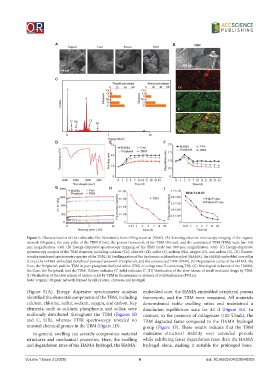
            Figure 1. Characterization of the trabeculae-like biomimetic bone-filling material (TBM). (A) Scanning electron microscopy imaging of the organic
            network (Organic), the core pillar of the TBM (Core), the porous framework of the TBM (Porous), and the constructed TBM (TBM; scale bar: 100
            μm; magnification: ×50). (B) Energy-dispersive spectroscopy mapping of the TBM (scale bar: 600 μm; magnification: ×40). (C) Energy-dispersive
            spectroscopy analysis of the TBM elements, including calcium (Ca), chloride (Cl), sulfur (S), sodium (Na), oxygen (O), and carbon (C). (D) Fourier-
            transform infrared spectrometry spectra of the TBM. (E) Swelling ratios of the hyaluronic acid methacryloyl (HAMA), the HAMA-embedded core pillar
            (Core), the HAMA-embedded peripheral porous framework (Peripheral), and the constructed TBM (TBM). (F) Degradation curve of the HAMA, the
            Core, the Peripheral, and the TBM in pure phosphate-buffered saline (PBS) or collagenase II-containing PBS. (G) Rheological behavior of the HAMA,
            the Core, the Peripheral, and the TBM. Hollow indicates G”. Solid indicates G’. (H) Verification of the slow release of small-molecule drugs by TBM.
            (I) Verification of the slow release of nucleic acids by TBM in the presence or absence of polyvinylamine (PVAm).
            Note: Organic: Organic network formed by silk protein, chitosan, and matrigel.

            (Figure S1A). Energy dispersive spectrometry analysis   embedded core, the HAMA-embedded peripheral porous
            identified the elemental components of the TBM, including   framework, and the TBM were measured. All materials
            calcium, chlorine, sulfur, sodium, oxygen, and carbon. Key   demonstrated stable swelling ratios and maintained a
            elements,  such  as  calcium,  phosphorus,  and  sulfur,  were   dissolution equilibrium state for 42 d (Figure  1E). In
            uniformly distributed throughout the TBM (Figures  1B   contrast, in the presence of collagenase (100 U/mL), the
            and  C, S1B), whereas FTIR spectroscopy revealed no   TBM degraded faster compared to the HAMA hydrogel
            unusual chemical groups in the TBM (Figure 1D).   group (Figure  1F). These results indicate that the TBM
               In general, swelling can severely compromise material   maintains structural stability over extended periods
            structures and mechanical properties. Here, the swelling   while exhibiting faster degradation rates than the HAMA
            and degradation rates of the HAMA hydrogel, the HAMA-  hydrogel alone, making it suitable for prolonged bone-


            Volume 1 Issue 2 (2025)                         6                            doi: 10.36922/OR025040003

