


Page 61 - OR-1-2
P. 61
characteristics (Table 2).                        Aβ peptides. Similarly, Park et al.  incorporated astrocytes
                                                                                        97
                                                              and microglia into a Matrigel culture system, successfully
            3.2.1. Matrigel                                   modeling AD-related neuroinflammation. Matrigel is
            Matrigel, a widely used biomaterial in cell culture systems,   a popular choice for creating vascularized organoids
            plays a pivotal role in BOs’ culture. Rich in growth   due to its ability to imitate the extracellular matrix, thus
            factors and ECM proteins, Matrigel provides essential   creating a supportive environment for cell growth and
            biochemical cues for cell differentiation, polarization,   differentiation. 98,99  It promotes the formation of vascular
            and the formation of organoid-like structures.  Lancaster   networks by supporting ECs’ growth and organization,
                                                  95
            et al.  first demonstrated that Matrigel enables  hiPSCs   allowing these cells to self-organize into blood vessel-like
                 4
            to  self-organize  into  3D  BOs,  mimicking  the  cellular   structures. However, Matrigel alone has been found to be
            complexity of the developing human brain. In addition   inadequate for supporting vascular lumens. Therefore,
            to providing structural support, Matrigel mimics the   researchers combined Matrigel with ECs, microfluidics
            properties of the native brain ECM,  facilitating the   platforms, and  in vivo transplantation to construct
            maturation of  neural  networks.  Kim  et al.   showed  that   vascularized organoids more effectively. 100
                                               96
            BOs cultured in 3D Matrigel promoted the aggregation of


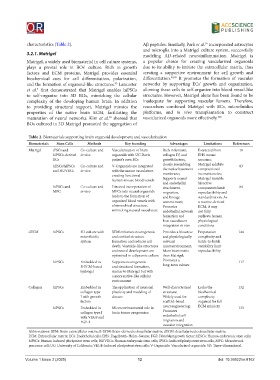
             Table 2. Biomaterials supporting brain organoid development and vascularization
             Biomaterials  Stem Cells  Methods        Key founding       Advantages     Limitations  References
             Matrigel   iPSCs and   Co-culture and   Vascularization of brain   Rich in laminin,   Extracted from   18
                        hiPSCs-derived  in vivo  organoids with UC Davis   collagen IV, and   EHS mouse
                        ECs                      patient’s own ECs    growth factors,   sarcoma;
                        hESCs/hiPSCs   Co-culture and   V-Organoids are integrated   closely resembling   Matrigel exhibits   83
                        and HUVECs  in vivo      with the mouse vasculature,   the native basement   compositional
                                                 creating functional   membrane;     inconsistencies;
                                                 human-mouse blood vessels  Supports neural   Matrigel variable
                                                                      and endothelial   bioactive
                        hiPSCs and   Co-culture and   Directed incorporation of   attachment,   components limit   84
                        MPC        in vivo       MPCs into neural organoids   migration,   reproducibility and
                                                 leads to the formation of   and lineage   standardization; As
                                                 organized blood vessels with   commitment;  a murine-derived
                                                 a hierarchical structure,   Promotes   ECM, it may
                                                 mimicking natural vasculature  endothelial network   not fully
                                                                      formation and   replicate human
                                                                      host vasculature   physiological
                                                                      integration in vivo  conditions
             dECM       hiPSCs     3D culture with   BEM enhances neurogenesis   Provides a bioactive   Preparation   144
                                   microfluidic   and cortical structure   and physiologically   complexity and
                                   system        formation and reduces cell   relevant   batch-to-batch
                                                 death; Ventricle-like structures  microenvironment;  variability limit
                                                 and neural development are   More biomimetic   reproducibility
                                                 optimized in a dynamic culture  than Matrigel;
                        hiPSCs     Embedded in   Supports neurogenesis   Promotes a                   117
                                   B-ECM-based   and structural formation,   long-term culture
                                   hydrogel      similar to Matrigel but with
                                                 a more native-like cellular
                                                 environment
             Collagen   hiPSCs     Embedded in   The application of neuronal   Well-characterized   Lacks the   132
                                   collagen type   plasticity and modeling of   structure;   biochemical
                                   I with growth   disease            Widely used for   complexity
                                   factors                            scaffold-based   required for full
                        hiPSCs     Embedded in   Microenvironmental role in   neuroengineering;   ECM mimicry  133
                                   collagen type I   brain tumor progression  Promotes
                                   with VEGF and                      endothelial cell
                                   FGF-2                              migration and
                                                                      vascular integration
             Abbreviations: BEM: Brain extracellular matrix; B-ECM: Brain-derived extracellular matrix; dECM: decellularized extracellular matrix;
             ECM: Extracellular matrix; ECs: Endothelial cells; EHS: Engelbreth–Holm–Swarm; FGF: Fibroblast growth factor; hESCs: Human embryonic stem cells;
             hiPSCs: Human induced pluripotent stem cells; HUVECs: Human embryonic stem cells; iPSCs: Induced pluripotent stem cells; MPC: Mesodermal
             precursor cell; UC: University of California; VEGF: Induced pluripotent stem cells; V-Organoids: Vascularized organoids; 3D: Three-dimensional.


            Volume 1 Issue 2 (2025)                         12                                doi: 10.36922/or.8162

