


Page 99 - OR-1-2
P. 99
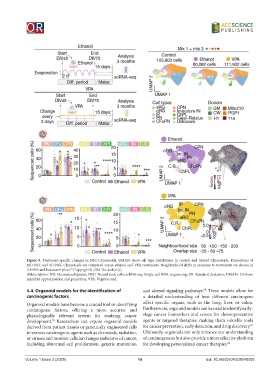
Figure 9. Treatment-specific changes in NSC-Chimeroids. UMAPs show cell type distribution in control and treated Chimeroids. Proportions of
            MD-NSC and SD-NSC-Chimeroids are compared across ethanol and VPA treatments. Neighborhood shifts in response to treatments are shown in
            UMAPs and beeswarm plots.  Copyright © 2024 The author(s).
                               69
            Abbreviations: ND: Neurodevelopment; NSC: Neural stem cells; scRNA-seq: Single-cell RNA sequencing; SD: Standard deviation; UMAPs: Uniform
            manifold approximation and projection; VPA: Valproic acid.
            4.4. Organoid models for the identification of    and altered signaling pathways.  These models allow for
                                                                                        80
            carcinogenic factors                              a detailed understanding of how different carcinogens
            Organoid models have become a crucial tool in identifying   affect  specific  organs,  such  as  the  lung,  liver,  or  colon.
            carcinogenic factors, offering a more accurate and   Furthermore, organoid models can be used to identify early-
            physiologically relevant system for studying cancer   stage cancer biomarkers and screen for chemopreventive
            development.  Researchers can expose organoid models   agents or targeted therapies, making them valuable tools
                       79
                                                                                                            81
            derived from patient tissues or genetically engineered cells   for cancer prevention, early detection, and drug discovery.
            to various carcinogenic agents such as chemicals, radiation,   Ultimately, organoids not only enhance our understanding
            or viruses and monitor cellular changes indicative of cancer,   of carcinogenesis but also provide a more effective platform
            including abnormal cell proliferation, genetic mutations,   for developing personalized cancer therapies. 82


            Volume 1 Issue 2 (2025)                         14                           doi: 10.36922/OR025040005

