


Page 65 - TD-2-2
P. 65
Tumor Discovery                                                            Enhanced SV analysis in WGS


                         A


                         B                        C


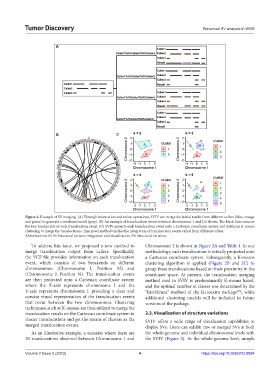
            Figure 2. Example of SV merging. (A) Through intersection and union operations, SVIV can merge the initial results from different callers (blue, orange
            and green) to generate a combined result (gray). (B) An example of translocation events between chromosome 1 and 2 is shown. The black lines connect
            the two breakpoints of each translocation event.  (C) SVIV projects each translocation event onto a Cartesian coordinate system and performs K-means
            clustering to merge the translocations. This novel method enables the integration of translocation events called from different callers.
            Abbreviations: SVIV: Structural variants integration and visualization; SV: Structural variation.
              To address this issue, we proposed a new method to   Chromosome 2 is shown in Figure 2A and Table 1. In our
            merge translocation output from callers. Specifically,   methodology, each translocation is initially projected onto
            the VCF file provides information on each translocation   a Cartesian coordinate system. Subsequently, a K-means
            event,  which  consists  of  two  breakends  on  different   clustering algorithm is applied (Figure  2B  and 2C) to
            chromosomes:  (Chromosome  I,  Position  M)  and   group these translocations based on their proximity in the
            (Chromosome J, Position  N). The translocation events   coordinate space. At present, the translocation merging
            are then projected onto a Cartesian coordinate system   method used in SVIV is predominantly K-means based,
            where the X-axis represents chromosome I and the   and the optimal number of classes was determined by the
            Y-axis represents chromosome J, providing a clear and   “firstSEmax” method of the factoextra package , while
                                                                                                      [15]
            concise visual representation of the translocation events   additional clustering models will be included in future
            that occur between the two chromosomes. Clustering   versions of the package.
            techniques, such as K-means, are then utilized to merge the
            translocation results on the Cartesian coordinate system to   2.3. Visualization of structure variations
            cluster translocations and get the means of clusters as the   SVIV offers a wide range of visualization capabilities to
            merged translocation events.                       display SVs. Users can exhibit raw or merged SVs at both
              As an illustrative example, a scenario where there are   the whole-genome and individual-chromosome levels with
            20 translocations observed between Chromosome 1 and   the SVIV (Figure  3). At the whole-genome level, sample


            Volume 2 Issue 2 (2023)                         4                          https://doi.org/10.36922/td.0894

