


Page 66 - TD-2-2
P. 66
Tumor Discovery                                                            Enhanced SV analysis in WGS


                         A


                         B


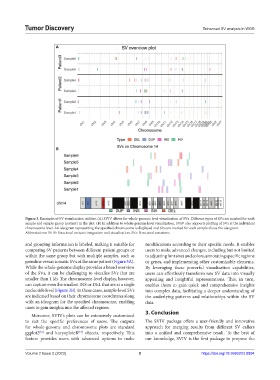
            Figure 3. Examples of SV visualization utilities. (A) SVIV allows for whole-genome level visualization of SVs. Different types of SVs are marked for each
            sample and sample group (patient) in the plot. (B) In addition to whole-genome level visualization, SVIV also supports plotting of SVs at the individual
            chromosome level. An ideogram representing the specified chromosome is displayed and SVs are marked for each sample above the ideogram.
            Abbreviations: SVIV: Structural variants integration and visualization; SVs: Structural variations.

            and grouping information is labeled, making it suitable for   modifications according to their specific needs. It enables
            comparing SV patterns between different patient groups or   users to make advanced changes, including but not limited
            within the same group but with multiple samples, such as   to adjusting font sizes and colors, annotating specific regions
            germline versus somatic SVs of the same patient (Figure 3A).   or genes, and implementing other customizable elements.
            While the whole-genome display provides a broad overview   By  leveraging  these  powerful  visualization  capabilities,
            of the SVs, it can be challenging to visualize SVs that are   users can effortlessly transform raw SV data into visually
            smaller than 1 kb. The chromosome-level display, however,   appealing and insightful representations. This, in turn,
            can capture even the smallest INS or DEL that are at a single   enables them to gain quick and comprehensive insights
            nucleotide level (Figure 3B). In these cases, sample-level SVs   into complex data, facilitating a deeper understanding of
            are indicated based on their chromosome coordinates along   the underlying patterns and relationships within the SV
            with an ideogram for the specified chromosome, enabling   data.
            users to gain insights into the affected regions.
              Moreover, SVIV’s plots can be extensively customized   3. Conclusion
            to suit the specific preferences of users. The outputs   The SVIV package offers a user-friendly and innovative
            for whole-genome and chromosome plots are standard   approach for merging results from different SV callers
                  [16]
            ggplot2  and karyoploteR  objects, respectively. This   into a unified and comprehensive result. To the best of
                                  [17]
            feature  provides  users  with  advanced  options  to  make   our knowledge, SVIV is the first package to propose the
            Volume 2 Issue 2 (2023)                         5                          https://doi.org/10.36922/td.0894

