


Page 71 - TD-2-2
P. 71
Tumor Discovery                                                   SRT with SIP planning for synovial sarcoma


            A                       B


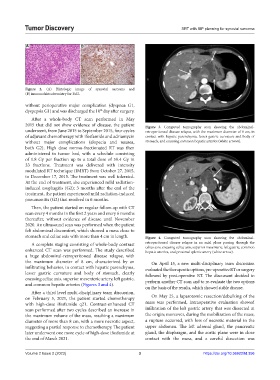
            Figure  2. (A) Histologic image of synovial sarcoma and
            (B) immunohistochemistry for Bcl2.

            without perioperative major complication (dyspnea G1,
            dyspepsia G1) and was discharged the 10  day after surgery.
                                            th
              After a whole-body CT scan performed in May
            2015  that  did  not  show  evidence  of  disease,  the  patient   Figure  3. Computed tomography scan showing the abdominal-
            underwent, from June 2015 to September 2015, four cycles   retroperitoneal disease relapse, with the maximum diameter of 8 cm, in
            of adjuvant chemotherapy with ifosfamide and adriamycin   contact with hepatic parenchyma, lesser gastric curvature and body of
            without major complications (alopecia and nausea,   stomach, and encasing common hepatic arteries (white arrows).
            both  G2). High dose normo-fractionated RT was then
            administered to tumor bed, with a schedule consisting
            of 1.8  Gy per fraction up to a total dose of 59.4  Gy in
            33  fractions.  Treatment was  delivered  with intensity
            modulated RT technique (IMRT) from October 27, 2015,
            to December 17, 2015. The treatment was well tolerated.
            At the end of treatment, she experienced mild radiation-
            induced esophagitis (G2); 3 months after the end of the
            treatment, the patient experienced mild radiation-induced
            pneumonitis (G2) that resolved in 6 months.
              Then, the patient started on regular follow-up with CT
            scan every 4 months in the first 2 years and every 6 months
            thereafter, without  evidence  of disease until November
            2020. An ultrasound scan was performed when the patient
            felt abdominal discomfort, which showed a mass close to
            stomach and celiac axis with more than 4 cm in length.  Figure  4. Computed tomography scan showing the abdominal-
              A complete staging consisting of whole-body contrast   retroperitoneal disease relapse in an axial plane passing through the
            enhanced CT scan was performed. The study described   celiax axis, encasing celiac axis, superior mesenteric, left gastric, common
                                                               hepatic arteries, and proximal splenic artery (white arrow).
            a huge abdominal-retroperitoneal disease relapse, with
            the maximum diameter of 8  cm, characterized by an   On April 15, a new multi-disciplinary team discussion
            infiltrating behavior, in contact with hepatic parenchyma,   evaluated the therapeutic options, pre-operative RT or surgery
            lesser gastric curvature and body of stomach, clearly   followed by post-operative RT. The discussant decided to
            encasing celiac axis, superior mesenteric artery, left gastric,   perform another CT scan and to re-evaluate the two options
            and common hepatic arteries (Figures 3 and 4).
                                                               on the basis of the results, which showed stable disease.
              After a third level multi-disciplinary team discussion,
            on February 5, 2021, the patient started chemotherapy   On May 25, a laparotomic resection/debulking of the
            with high-dose ifosfamide q21. Contrast-enhanced CT   mass was performed, intraoperative evaluation showed
            scan performed after two cycles described an increase in   infiltration of the left gastric artery that was dissected at
            the maximum volume of the mass, reaching a maximum   the origin; moreover, during the mobilization of the mass,
            diameter of more than 8 cm, with a more necrotic aspect,   a rupture occurred, with loss of necrotic material in the
            suggesting a partial response to chemotherapy. The patient   upper  abdomen.  The  left  adrenal  gland,  the  pancreatic
            later underwent one more cycle of high-dose ifosfamide at   gland, the diaphragm, and the aortic plane were in close
            the end of March 2021.                             contact with the mass, and a careful dissection was


            Volume 2 Issue 2 (2023)                         3                           https://doi.org/10.36922/td.356

