


Page 47 - TD-3-4
P. 47
Tumor Discovery                                                                PPAR agonist and cancer


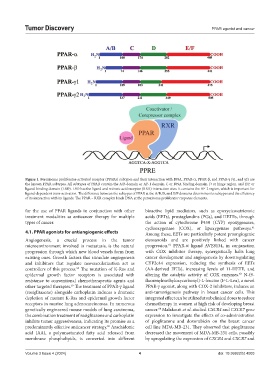
            Figure 1. Peroxisome proliferator-activated receptor (PPARs) subtypes and their interaction with DNA. PPAR-α, PPAR-β, and PPAR-γ (γ1, and γ2) are
            the known PPAR subtypes. All subtypes of PPAR contain the A/B domain or AF-1 domain, C or DNA binding domain, D or hinge region, and E/F or
            ligand-binding domain (LBD). LBD has the ligand and retinoic acid receptor (RXR) interaction sites. It contains the AF-2 region, which is important for
            ligand-dependent trans-activation. The difference between the subtypes of PPAR at the A/B, D, and E/F domains determines its subtypes and the efficiency
            of its interaction with its ligands. The PPAR – RXR complex binds DNA at the peroxisome proliferator response elements.

            for the use of PPAR ligands in conjunction with other   bioactive lipid mediators, such as epoxyeicosatrienoic
            treatment modalities  as anticancer  therapy for multiple   acids (EETs), prostaglandins (PGs), and HETEs, through
            types of cancer.                                   the  action  of cytochrome  P450 (CYP)  epoxygenases,
                                                               cyclooxygenase (COX), or lipoxygenase pathways.
                                                                                                            61
            4.1. PPAR agonists for antiangiogenic effects      Among these, EETs are particularly potent proangiogenic
            Angiogenesis, a crucial process in the tumor       eicosanoids  and  are positively linked with cancer
                                                                         62
            microenvironment involved in metastasis, is the natural   progression.   PPAR-α  ligand AVE8134,  in conjunction
            progression through which new blood vessels form from   with COX inhibitor therapy, synergistically halts lung
            existing ones. Growth factors that stimulate angiogenesis   cancer development and angiogenesis by downregulating
            and inhibitors that regulate neovascularization act as   CYP2c44 expression, reducing the synthesis of EETs
            controllers of this process.  The mutation of K-Ras and   (AA-derived EETs), increasing levels of 11-HETE, and
                                  58
            epidermal growth factor receptors is associated with   altering the catalytic activity of COX enzymes.  N-(9-
                                                                                                       63
            resistance to conventional chemotherapeutic agents and   fluorenylmethyloxycarbonyl)-L-leucine (F-L-Leu), a novel
            other targeted therapies.  The treatment of PPAR-γ ligand   PPAR-γ agonist, along with COX-2 inhibitors, induces an
                               59
            (rosiglitazone) alongside carboplatin induces a dramatic   anti-tumorigenesis pathway in breast cancer cells. This
            depletion of mutant K-Ras and epidermal growth factor   integrated effect can be utilized at subclinical doses to reduce
            receptors in murine lung adenocarcinomas. In numerous   chemotherapy in women at high risk of developing breast
            genetically engineered mouse models of lung carcinoma,   cancer.  Malakouti et al. studied CXCR4 and CXCR7 gene
                                                                    64
            the combination treatment of rosiglitazone and carboplatin   expression to investigate the effects of co-administration
            inhibits tumor aggressiveness, indicating its promise as a   of  pioglitazone  and  doxorubicin  on  the  breast  cancer
            predominantly effective anticancer strategy.  Arachidonic   cell line MDA-MB-231. They observed that pioglitazone
                                               60
            acid (AA), a polyunsaturated fatty acid released from   decreased the movement of MDA-MB-231 cells, possibly
            membrane phospholipids, is converted into different   by upregulating the expression of CXCR4 and CXCR7 and


            Volume 3 Issue 4 (2024)                         4                                 doi: 10.36922/td.4003

