


Page 61 - TD-3-4
P. 61
Tumor Discovery                                                  RNA-protein complexes deregulated in cancer


            nucleolus and various ribonucleoprotein (RNP) granules,   epigenetically and epitranscriptome regulation relevant to
            such as promyelocytic leukemia (PML) nuclear bodies,   the field of cancer cell biology.
            speckles, paraspeckles, Cajal bodies, DNA damage foci,
            and processing (P) bodies. In contrast, U bodies, stress   2. BC localization and
            granules (SGs), signalosomes, and the pyrenoid are   compartmentalization
            found outside the nucleus. A  single protein capable of   There are five mechanisms of messenger RNA (mRNA)
            simultaneously interacting  with  multiple copies of itself   localization: (1) diffusion and local entrapment,
            drives homotypic phase separation, whereas interaction   (2)  stabilization and controlled degradation, (3) active
            with multiple other biomolecules leads to heterotypic phase
            separation, as observed in RNA–protein complexes.    transport by molecular motors, (4) vesicular trafficking
                                                         1,2
                                                                                                        13-17
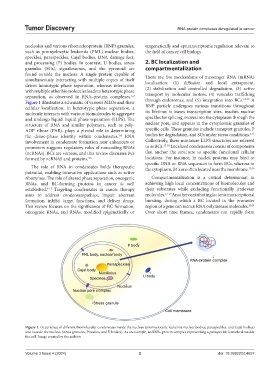
            Figure 1 illustrates a schematic of various MLOs and their   through endosomes, and (5) integration into BCs.   A
            cellular localization. In heterotypic phase separation, a   RNP particle undergoes various transitions throughout
            molecule interacts with various biomolecules to aggregate   its  lifetime;  it  leaves  transcription  sites,  reaches  nuclear
            and undergo liquid–liquid phase separation (LLPS). The   speckles for splicing, moves into the cytoplasm through the
            structure of RNA and similar polymers, such as poly-  nuclear pore, and appears in the cytoplasmic granules of
            ADP ribose (PAR), plays a pivotal role in determining   specific cells. These granules include transport granules, P
                                                                                                           3,11
            the dense-phase identity within condensates.  RNA   bodies for degradation, and SGs under stress conditions.
                                                   3,4
            involvement in condensate formation near enhancers or   Collectively, these miniature LLPS structures are referred
            promoters suggests regulatory roles of noncoding RNAs   to as BCs. 12-14  Localized condensates consist of components
            (ncRNAs). BCs are various, and this review discusses Bcs   that anchor the structure to specific functional cellular
            formed by ncRNAS and proteins. 3,5                 locations. For instance, in nuclei, proteins may bind to
                                                               specific DNA or RNA sequences to form BCs, whereas in
              The role of RNA in condensates holds therapeutic   the cytoplasm, BCs are often located near the membrane. 15,16
            potential, enabling innovative applications such as active
            ribozymes. The role of altered phase separation, oncogenic   Compartmentalization is a critical determinant in
            RNAs, and BC-forming proteins in cancer is well    achieving high local concentrations of biomolecules and
            established. 6-13   Targeting  condensates  in  cancer  therapy   their  substrates  while  excluding  functionally  irrelevant
            aims to address condensatopathies, impair aberrant   molecules. 17-19  Another contributing factor is transcriptional
            formation, inhibit target functions, and deliver drugs.   bursting, during which a  BC  located in  the  promoter
            This review focuses on the significance of BC formation,   region of a gene can recruit RNA polymerase molecules. 20,21
            oncogenic  RNAs,  and RNAs,  modified  epigenetically  or   Over  short  time  frames,  condensates  can  rapidly  form


            Figure 1. Occurrence of different biomolecular condensates inside the nucleus (promyelocytic leukemia nuclear bodies, paraspeckles, and Cajal bodies)
            and outside the nucleus (stress granules, P bodies, and U bodies). As an example, an RNA–protein complex representing a paraspeckle is marked outside
            the cell. Image created by the authors


            Volume 3 Issue 4 (2024)                         2                                 doi: 10.36922/td.4657

