


Page 71 - AC-2-2
P. 71
Arts & Communication                                                      Japanese children’s musical flow


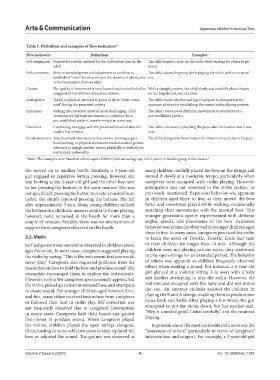
            Table 1. Definition and examples of flow indicators 9
            Flow indicators             Definitions                                Examples*
            Self-assignment Purposeful activity initiated by the child rather than by the   The child fingers a scale on the violin while waiting for others to get
                        adult.                                  tuned.
            Self-correction  Error acknowledgment and adjustment to conform to   The child adjusts fingering while playing the violin with no external
                        established “rules” for an activity in the absence of physical or  cue.
                        verbal instruction from an adult.
            Gesture     The quality of movement is very focused and controlled, often  With a straight posture, the child slowly and carefully places fingers
                        exaggerated but with no extraneous motion.  on the fingerboard, one at a time.
            Anticipation  Verbal or physical attempts to guess or show “what comes   The child readies the feet and legs to prepare to demonstrate the
                        next” during the presented activity.    sequence of steps for establishing the correct violin playing posture.
            Expansion   Making the presented material more challenging, child   The child creates novel rhythmic movements to substitute for a
                        creates novel rhythmic movements to substitute for a   pre-established pattern.
                        pre-established pattern, transforming it in some way.
            Extension   Continuing to engage with the presented material after the   The child continues to play/sing the piece after the teacher said it was
                        teacher has finished.                   over.
            Social awareness Any observable interactions that involve prolonged gaze,   The child changes his movement to the music to match that of his peer.
                        head-turning, or physical movement toward another person.
                        Attempts to engage another person physically or verbally are
                        particularly noteworthy.
            *Note: The examples were based on school-aged children (with an average age of 6.3 years) in Suzuki group violin classes. 9
            she moved on to another booth. Similarly, a 5-year-old   many children carefully placed the bow on the strings and
            girl engaged in repetitive button pressing; however, she   moved it slowly at a moderate tempo, particularly when
            was looking at the 3-year-old girl and the other boy next   caregivers  were occupied with violin playing.  However,
            to her pressing the buttons in the same manner. She was   anticipation was not observed in the violin section, as
            not specifically pressing the button to create a musical beat;   previously mentioned. Expansion behavior was apparent
            rather, she simply repeated pressing the buttons. She left   in children aged three to five, as they moved the bow
            after approximately 3 min. Many young children utilized   faster and sometimes played while walking, occasionally
            the buttons in a rhythmic manner similar to drum playing;   matching their movements with the musical beat. This
            however,  none  remained  in  the  booth  for  more  than  a   younger generation openly experimented with different
            couple of minutes. Notably, there was no intervention or   angles, speeds, and placements of the bow. Extension
            support from caregivers observed in this booth.    behavior was primarily observed in younger children aged
                                                               three to five. In many cases, caregivers practiced the violin
            3.2. Violin                                        to learn the notes of  Twinkle,  Twinkle,  Little Star next
            Self-assignment was somewhat observed in children above   to their children for longer than 10  min. Although the
            ages five or six. In most cases, caregivers suggested playing   children were not playing certain notes, they continued
            the violin by saying, “This is the instrument that you would   to play open strings for an extended period. The behavior
            never play.” Caregivers also requested guidance from the   of others was apparent as children frequently observed
            researcher on how to hold the bow and produce sound. The   others when making a sound. For instance, a 6-year-old
            researcher  encouraged them  to explore the  instruments.   girl glanced at a violinist sitting 3  m away with a baby
            However, only a few caregivers spontaneously approached   and mother attempting to play the violin. However, the
            the violin, picked up an instrument and bow, and attempted   violinist was occupied with the baby and did not notice
            to create sound. For younger children aged between three   the  cue. An amateur  violinist  assisted  the  children  in
            and five, many either received instruction from caregivers   playing the E and A strings, enabling them to produce two
            or followed their lead in violin play. Self-correction was   tunes back and forth. After playing a few times, the girl
            not frequently observed due to caregivers’ intervention   attempted to put the violin down, but her mother said,
            in many cases. Caregivers held their hands and guided   “Hey, it sounded good. Listen carefully,” and she resumed
            their  bows  to  produce  sound.  When  caregivers  played   playing.
            the violins, children played the open strings alongside   In general, one of the most noticeable indicators was the
            them, leading to some self-correction as they replaced the   “awareness of others,” particularly in terms of caregivers’
            bow or adjusted the sound. The gesture was observed as   interventions and support. For example, a 3-year-old girl


            Volume 2 Issue 2 (2024)                         4                                doi: 10.36922/ac.1782

