


Page 73 - AC-2-2
P. 73
Arts & Communication                                                      Japanese children’s musical flow


                                                               at the same time, the sound came from the same single
                                                               speaker with many different buttons. As a result, children
                                                               just pressed the buttons and did not experience flow in
                                                               the sound-making compared with the violins and metallic
                                                               materials. The device itself may need improvement for
                                                               children to capture the sound tied directly to the action
                                                               of the pressing buttons. This interpretation matches the
                                                               trait of the original flow theory that immediate feedback
                                                               is necessary.

                                                               4. Conclusion
                                                               The results revealed that children experienced the most
                                                               apparent flow  when  interacting with metallic materials,
                                                               followed by violin-related activities, but not so much
                                                               with the technological instrument. Specifically, children
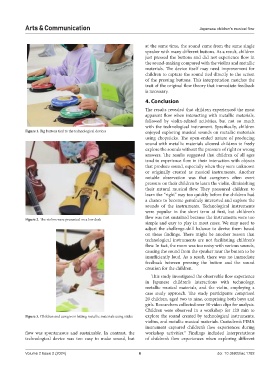
            Figure 1. Big buttons tied to the technological devices  enjoyed exploring musical sounds on metallic materials
                                                               using chopsticks. The open-ended nature of producing
                                                               sound with metallic materials allowed children to freely
                                                               explore the sounds without the pressure of right or wrong
                                                               answers. The results suggested that children of all ages
                                                               tend to experience flow in their interaction with objects
                                                               that produce sound, especially when they were unknown
                                                               or originally created as musical instruments. Another
                                                               notable observation was that caregivers often exert
                                                               pressure on their children to learn the violin, diminishing
                                                               their natural musical flow. They pressured children to
                                                               learn the “right” way too quickly before the children had
                                                               a chance to become genuinely interested and explore the
                                                               sounds  of  the  instruments.  Technological  instruments
                                                               were popular in the short term at first, but children’s
                                                               flow was not sustained because the instruments were too
            Figure 2. The violins were presented on a low desk
                                                               simple and easy to play in most cases. We may need to
                                                               adjust  the  challenge-skill  balance  to  devise  them  based
                                                               on these findings. There might be another reason that
                                                               technological  instruments  are  not  facilitating  children’s
                                                               flow. In fact, the room was too noisy with various sounds,
                                                               causing the sound from the speaker near the button to be
                                                               insufficiently loud. As a result, there was no immediate
                                                               feedback between pressing the button and the sound
                                                               creation for the children.
                                                                 This study investigated the observable flow experience
                                                               in Japanese children’s interactions with technology,
                                                               metallic musical materials, and the violin, employing a
                                                               case study approach. The study participants comprised
                                                               20 children, aged two to nine, comprising both boys and
                                                               girls. Researchers collected over 50 video clips for analysis.
                                                               Children  were  observed  in  a  workshop  for  120  min  to
            Figure 3. Children and caregivers hitting metallic materials using sticks  explore the sound created by technological instruments,
                                                               violins, and metallic musical materials. Custodero’s FIMA
                                                               instrument captured children’s flow experiences during
            flow was spontaneous and sustainable. In contrast, the   workshop activities.  Findings included interpretations
                                                                               9
            technological device was too easy to make sound, but   of children’s flow  experiences  when exploring different

            Volume 2 Issue 2 (2024)                         6                                doi: 10.36922/ac.1782

