


Page 16 - AIH-1-1
P. 16
Artificial Intelligence in Health                                           AI in prostate cancer detection


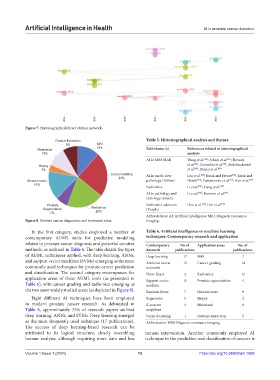
            Figure 7. Historiographical direct citation network.


                         Feature Extraction                    Table 5. Historiographical analysis and themes
                             9%           MRI
                 Metastasis               12%                  Path theme (s)    References related to historiographical
                   10%                                                           analysis
                                                               AI in MRI (Red)   Wang et al. ; Alkadi et al. ; Bernatz
                                                                                                  [65]
                                                                                        [42]
                                                                                                [67]
                                                                                    [66]
                  Biopsy                                                         et al. ; Corradini et al. ; Abdelmaksoud
                                                                                    [68]
                   3%                                                            et al. ; Donisi et al. [69]
                                                Cancer Grading  AI in multi-view   Leo et al. ; Kwak and Hewitt ; Kwak and
                                                                                      [70]
                                                                                                    [71]
                                                   24%
                                                                                     [72]
                                                                                                   [19]
             Gleason score                                     pathology (Yellow)  Hewitt ; Pantanowitz et al. ; Han et al. [73]
               15%
                                                               Radiomics         Li et al. ; Liang et al. [75]
                                                                                     [74]
                                                               AI in pathology and   Li et al. ; Harmon et al. [77]
                                                                                     [76]
                                                               radiology (Green)
                                                                                       [78]
                     Prostate                                  Radiomics advances   Hou et al. ; Lim et al. [79]
                   Segmentation         Radiomics              (Purple)
                      7%                  20%
                                                               Abbreviations: AI: Artificial intelligence; MRI: Magnetic resonance
            Figure 8. Prostate cancer diagnostics and treatment areas.  imaging.
              In the first category, studies employed a number of   Table 6. Artificial intelligence or machine learning
            contemporary  AI/ML  tools  for  predictive  modeling   techniques: Contemporary research and application
            related to prostate cancer diagnosis and potential curative   Contemporary   No of   Application areas  No. of
            methods, as outlined in Table 6. The table details the types   Research  publications   publications
            of AI/ML techniques applied, with deep learning, ANNs,   Deep learning   17  MRI            7
            and support vector machines (SVMs) emerging as the most   Artificial neural   15  Cancer grading  14
            commonly used techniques for prostate cancer prediction   networks
            and classification. The second category encompasses the   Naïve Bayes   2  Radiomics        12
            application areas  of  these  AI/ML  tools  (as  presented  in   Support vector   11  Prostate segmentation  4
            Table 6), with cancer grading and radiomics emerging as   machine
            the two most widely studied areas (as depicted in Figure 8).  Random forest  7  Gleason score  9
              Eight different AI techniques have been employed   Regression    5     Biopsy             2
            in modern prostate cancer research. As delineated in   K-nearest   4     Metastasis         6
            Table 6, approximately 75% of research papers utilized   neighbors
            deep learning, ANNs, and SVMs. Deep learning emerged   Fuzzy clustering   1  Features extraction  5
            as the most frequently used technique (17 publications).   Abbreviation: MRI: Magnetic resonance imaging.
            The success of deep learning-based research can be
            attributed to its logical structure, closely resembling   human intervention. Another commonly employed AI
            human analysis, although requiring  more data and less   technique in the prediction and classification of cancers is


            Volume 1 Issue 1 (2024)                         10                        https://doi.org/10.36922/aih.1958

