


Page 129 - AIH-1-2
P. 129
Artificial Intelligence in Health                                              SDoH in clinical narratives


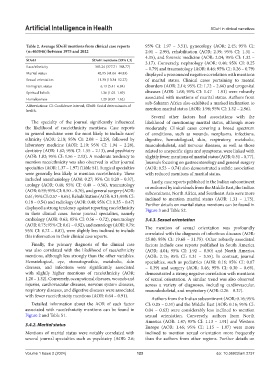
            Table 2. Average SDoH mentions from clinical case reports   95% CI: 1.97 – 3.51), gynecology (AOR: 2.45; 95% CI:
            (n=463546) between 1975 and 2022                   2.01 – 2.99), rehabilitation (AOR: 2.39; 95% CI: 1.31 –
                                                               4.35), and forensic medicine (AOR: 2.04; 95% CI: 1.32 –
            SDoH                        SDoH mentions (95% CI)  3.17). Conversely, nephrology (AOR: 0.46; 95%  CI: 0.25
            Race/ethnicity               383.24 (377.71–388.77)  – 0.79) and traumatology (AOR: 0.46; 95% CI: 0.26 – 0.79)
            Marital status                 42.95 (41.06–44.83)  displayed a pronounced negative correlation with mentions
            Sexual orientation             11.30 (10.34–12.27)  of marital status. Clinical cases pertaining to mental
            Immigrant status                6.13 (5.41–6.84)   disorders (AOR: 2.14; 95% CI: 1.72 – 2.66) and urogenital
            Spiritual beliefs               1.36 (1.02–1.69)   diseases (AOR: 1.68; 95% CI: 1.47 – 1.91) were robustly
            Homelessness                    1.29 (0.97–1.62)   associated with mentions of marital status. Authors from
            Abbreviations: CI: Confidence interval; SDoH: Social determinants of   sub-Saharan Africa also exhibited a marked inclination to
            health.                                            mention marital status (AOR: 1.98; 95% CI: 1.32 – 2.96).
                                                                 Several other factors had associations with the
              The specialty of the journal significantly influenced   likelihood of mentioning marital status, although more
            the  likelihood  of race/ethnicity  mentions. Case reports   moderately. Clinical cases covering a broad spectrum
            in general medicine were the most likely to include race/  of conditions, such as wounds, neoplasms, infections,
            ethnicity (AOR: 2.18; 95% CI: 2.08 – 2.29), followed by   digestive, hematological, skin, respiratory, metabolic,
            laboratory medicine (AOR: 2.10; 95% CI: 1.94 – 2.28),   musculoskeletal, and nervous diseases, as well as those
            dentistry (AOR: 1.82; 95% CI: 1.55 – 2.13), and psychiatry   related to unspecific signs and symptoms, were linked with
            (AOR: 1.82; 95% CI: 1.56 – 2.13). A moderate tendency to   slightly fewer mentions of marital status (AOR: 0.51 – 0.77).
            mention race/ethnicity was also observed in other journal   Journals focusing on gastroenterology and general surgery
            specialties (AOR: 1.37 – 1.97) (Table S1). Surgical specialties   (AOR: 0.53 – 0.74) also demonstrated a subtle association
            were generally less likely to mention race/ethnicity. These   with reduced mentions of marital status.
            included anesthesiology (AOR: 0.27; 95% CI: 0.20 – 0.37),   Lastly, case reports published in the Indian subcontinent
            urology  (AOR:  0.48;  95%  CI: 0.40  –  0.56),  traumatology   or authored by individuals from the Middle East, the Indian
            (AOR: 0.59; 95% CI: 0.50 – 0.70), and general surgery (AOR:   subcontinent, North Africa, and Southeast Asia were more
            0.61; 95% CI: 0.57 – 0.65). Rehabilitation (AOR: 0.31; 95% CI:   inclined to mention marital status (AOR: 1.31 – 1.75).
            0.18 – 0.54) and radiology (AOR: 0.40; 95% CI: 0.35 – 0.47)   Further details on marital status mentions can be found in
            displayed a strong tendency against reporting race/ethnicity   Figure 3 and Table S2.
            in their clinical cases. Some journal specialties, namely
            cardiology (AOR: 0.63; 95% CI: 0.56 – 0.72), pneumology   3.4.3. Sexual orientation
            (AOR: 0.75; 95% CI: 0.61 – 0.92), and neurology (AOR: 0.79;   The mention of sexual orientation was profoundly
            95% CI: 0.72 – 0.87), were slightly less inclined to include
            this information in their clinical case reports.   correlated with the diagnosis of infectious diseases (AOR:
                                                               25.00; 95% CI: 19.68 – 31.75). Other robustly associated
              Finally, the primary diagnosis of the clinical case   factors include case reports published in South America
            was also correlated with the likelihood of race/ethnicity   (AOR: 4.04; 95% CI: 1.92 – 8.50) and North America
            mentions, although less strongly than the other variables.   (AOR: 2.15; 95% CI: 1.31 – 3.55). In contrast, journal
            Hematological, eye, stomatognathic, metabolic, skin   specialties, such as pediatrics (AOR: 0.16; 95% CI: 0.07
            diseases, and infections were significantly associated   – 0.39) and surgery (AOR: 0.46; 95% CI: 0.30 – 0.69),
            with slightly higher mentions of race/ethnicity (AOR:   demonstrated a strong negative correlation with mentions
            1.20 – 1.32). Conversely, occupational diseases, wounds and   of sexual orientation. A similar trend was also observed
            injuries, cardiovascular diseases, nervous system diseases,   across a variety of diagnoses, including cardiovascular,
            respiratory diseases, and digestive diseases were associated   musculoskeletal, and respiratory (AOR: 0.26 – 0.37).
            with fewer race/ethnicity mentions (AOR: 0.64 – 0.91).
                                                                 Authors from the Indian subcontinent (AOR: 0.16; 95%
              Detailed information about the AOR of each factor   CI: 0.05 – 0.51) and the Middle East (AOR: 0.16; 95% CI:
            associated with race/ethnicity mentions can be found in   0.04  – 0.63)  were  considerably less  inclined to  mention
            Figure 2 and Table S1.                             sexual orientation. Conversely, authors from North
                                                               America (AOR: 1.47; 95% CI: 1.13 – 1.91) and Western
            3.4.2. Marital status                              Europe  (AOR: 1.46;  95% CI: 1.15  – 1.87)  were more
            Mentions  of  marital  status  were  notably  correlated  with   inclined to mention sexual orientation more frequently
            several journal specialties such as psychiatry (AOR: 2.6;   than the authors from other regions. Further details on


            Volume 1 Issue 2 (2024)                        123                               doi: 10.36922/aih.2737

