


Page 107 - AIH-1-3
P. 107
Artificial Intelligence in Health                                 ISM: A new multi-view space-learning model


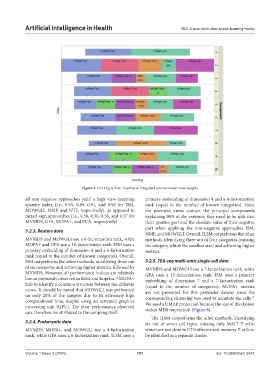
                                    Figure 4. UCI Digits data: Treemap of integrated sources model view weights

            all non-negative approaches yield a high view-mapping   primary embedding of dimension 4 and a 4-factorization
            sparsity  index  (i.e.,  0.93,  0.89,  0.91,  and  0.98  for  ISM,   rank (equal to the number of known categories). Since
            MOWGLI, NMF, and NTF, respectively), as opposed to   the provided views contain the principal components
            mixed-sign approaches (i.e., 0.56, 0.30, 0.56, and 0.57 for   explaining 90% of the variance, they need to be split into
            MVMDS, GFA, MOFA+, and PCA, respectively).         their positive part and the absolute value of their negative
                                                               part when applying the non-negative approaches ISM,
            3.2.3. Reuters data
                                                               NMF, and MOWGLI. Overall, ILSM outperforms the other
            MVMDS and MOWGLI use a 6-factorization rank, while   methods, identifying three out of four categories (missing
            MOFA+ and GFA use a 10-factorization rank. ISM uses a   the category which the smallest size) and achieving higher
            primary embedding of dimension 6 and a 6-factorization   metrics.
            rank (equal to the number of known categories). Overall,
            ISM outperforms the other methods, identifying three out   3.2.5. TEA-seq multi-omic single-cell data
            of six categories and achieving higher metrics, followed by   MVMDS and MOWGLI use a 7-factorization rank, while
            MVMDS. However, all performance indices are relatively   GFA  uses  a 15-factorization rank.  ISM  uses  a  primary
            low, as previously observed in Brbic and Kopriva.  MOFA+   embedding of dimension 7 and a 7-factorization rank
                                                  22
            fails to identify a common structure between the different   (equal to the number of categories). MOFA+ metrics
            views. It should be noted that MOWGLI was performed   are not presented for this particular dataset since the
            on only 20% of the samples due to its extremely high   corresponding clustering was used to annotate the cells.
                                                                                                            21
            computational time, despite using an activated  graphics   We used a UMAP projection because the size of the dataset
            processing unit (GPU). The poor performance observed
            can, therefore, be attributed to the sampling itself.  makes MDS impractical (Figure 8).
                                                                 The ILSM outperforms the other methods, identifying
            3.2.4. Prokaryotic data                            six out of seven cell types, missing only MAIT T cells,
            MVMDS, MOFA+, and MOWGLI use a 4-factorization     which are too close to CD4 effector and memory T cells to
            rank, while GFA uses a 6-factorization rank. ILSM uses a   be identified as a separate cluster.


            Volume 1 Issue 3 (2024)                        101                               doi: 10.36922/aih.3427

