


Page 113 - AIH-1-3
P. 113
Artificial Intelligence in Health                                 ISM: A new multi-view space-learning model


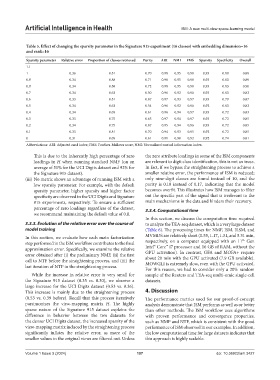
            Table 5. Effect of changing the sparsity parameter in the Signature 915 experiment (16 classes) with embedding dimension=16
            and rank=16
            Sparsity parameter  Relative error  Proportion of classes retrieved  Purity  ARI  NMI  FMS  Sparsity  Specificity  Overall
            1.1                 -               -               -      -    -     -     -        -       -
            1                  0.36            0.81            0.70   0.98  0.95  0.98  0.93    0.80    0.88
            0.9                0.34            0.88            0.71   0.98  0.95  0.98  0.93    0.83    0.89
            0.8                0.34            0.88            0.72   0.98  0.95  0.98  0.93    0.83    0.90
            0.7                0.34            0.63            0.50   0.96  0.92  0.96  0.93    0.83    0.82
            0.6                0.33            0.81            0.67   0.97  0.93  0.97  0.93    0.79    0.87
            0.5                0.34            0.63            0.54   0.96  0.92  0.96  0.92    0.83    0.82
            0.4                0.34            0.69            0.61   0.96  0.94  0.97  0.93    0.72    0.83
            0.3                0.33            0.75            0.65   0.97  0.94  0.97  0.93    0.72    0.85
            0.2                0.34            0.75            0.67   0.95  0.94  0.96  0.93    0.72    0.85
            0.1                0.33            0.81            0.70   0.94  0.93  0.95  0.92    0.72    0.85
            0                  0.31            0.69            0.61   0.91  0.90  0.92  0.92    0.74    0.81
            Abbreviations: ARI: Adjusted rand index; FMS: Fowlkes-Mallows score; NMI: Normalized mutual information index.

               This is due to the inherently high percentage of zero   the zero attribute loadings in some of the ISM components
               loadings in H when running standard NMF (on an   are relevant to digit class identification, this is not an issue.
               average of 51% for the UCI Digits dataset and 92% for   In fact, if we bypass the straightening process to achieve a
               the Signature 915 dataset).                     smaller relative error, the performance of ISM is reduced;
            (iii) No metric shows an advantage of running ISM with a   only nine-digit classes are found instead of 10, and the
               low sparsity parameter. For example, with the default   purity is 0.18 instead of 0.17, indicating that the model
               sparsity parameter, higher sparsity and higher factor   becomes overfit. This illustrates how ISM manages to filter
               specificity are observed in the UCI Digits and Signature   out the specific part of the signal that is irrelevant to the
               915 experiments, respectively. To ensure  a sufficient   main mechanisms in the data and hinders their recovery.
               percentage of zero loadings regardless of the dataset,   3.3.4. Computational time
               we recommend maintaining the default value of 0.8.
                                                               In this section, we discuss the computation time required
            3.3.3. Evolution of the relative error over the course of   to analyze the TEA-seq dataset, which is a very large dataset
            model training                                     (Table 6). The processing times for NMF, ISM, ILSM, and
            In this section, we evaluate how each main factorization   MVMDS are relatively short (0.55, 1.17, 1.31, and 5.31 min,
                                                                                                        th
            step performed in the ISM workflow contributes to the final   respectively, on a computer equipped with an 11   Gen
            approximation error. Specifically, we examine the relative   Intel® Core™ i7 processor and 16 GB of RAM, without the
            error obtained after (i) the preliminary NMF, (ii) the first   GPU  activation).  In  contrast,  GFA  and  MOFA+  require
            call to NTF before the straightening process, and (iii) the   about 20 min with the GPU activated (7.9 GB available).
            last iteration of NTF in the straightening process.  MOWGLI is extremely slow, even with the GPU activated.
                                                               For this reason, we had to consider only a 20% random
              While the increase in relative error is very small for   sample of the Reuters and TEA-seq multi-omic single-cell
            the Signature 915 dataset (0.35  vs. 0.30), we observe a   datasets.
            large increase for the UCI Digits dataset (0.53 vs. 0.36).
            This increase is mainly due to the straightening process   4. Discussion
            (0.53  vs. 0.39  before).  Recall  that this  process  iteratively   The performance metrics used for our proof-of-concept
            parsimonizes the view-mapping matrix  H. The highly   analysis demonstrate that ISM performs as well as or better
            sparse nature of the Signature 915 dataset explains the   than other methods. The ISM workflow uses algorithms
            difference in behavior between the two datasets: for   with proven performance and convergence properties,
            the denser UCI Digits dataset, the increased sparsity of the   such as NMF and NTF, which is consistent with the good
            view-mapping matrix induced by the straightening process   performance of ISM observed in our examples. In addition,
            significantly inflates the relative error, as more of the   the low computational time for large datasets indicates that
            smaller values in the original views are filtered out. Unless   this approach is highly scalable.


            Volume 1 Issue 3 (2024)                        107                               doi: 10.36922/aih.3427

