


Page 127 - AIH-1-3
P. 127
Artificial Intelligence in Health                                 Interpretability of deep models for COVID-19


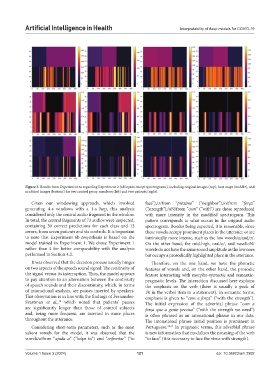
            Figure 3. Results from Experiment 6a regarding Experiment 2 (all inputs except spectrograms), including original images (top), heat maps (middle), and
            modified images (bottom) for two control group members (left) and two patients (right).

              Given our windowing approach, which involved     face”);/ɔ/from  “próximo”  (“neighbor”);/o/from  “força”
            generating 4-s windows with a 1-s hop, this analysis   (“strength”);/oN/from “com” (“with”) are those reproduced
            considered only the central audio fragment in the window.   with more intensity in the modified spectrogram. This
            In total, the central fragments of 73 audios were inspected,   pattern corresponds to what occurs in the original audio
            containing 30 correct predictions for each class and 13   spectrogram. Besides being expected, it is reasonable, since
            errors, from seven patients and six controls. It is important   these vowels occupy prominent places in the utterance or are
            to  note  that  Experiment  6b  resynthesis  is  based  on  the   intrinsically more intense, such as the low vowels/a/and/ɔ/.
            model trained in Experiment 1. We chose Experiment 1   On  the  other  hand,  the  mid-high,  oral/o/,  and nasal/oN/
            rather than 4 for better comparability with the analysis   vowels do not have the same sound amplitude as the low ones
            performed in Section 4.2.                          but occupy a prosodically highlighted place in the utterance.
              It was observed that the decision process usually hinges   Therefore, on the one hand, we have the phonetic
            on two aspects of the speech sound signal: The continuity of   features of vowels and, on the other hand, the prosodic
            the signal versus its interruption. Thus, the model appears   feature interacting with morpho-syntactic and semantic-
            to pay attention to an alternation between the continuity   pragmatic levels. The interaction discussed here explains
            of speech sounds and their discontinuity, which, in terms   the emphasis on the verb (there is usually a peak of
            of intonational analysis, are pauses inserted by speakers.   F0 in the verbal item in a statement). In semantic terms,
            This observation is in line with the findings of Fernandes-  emphasis is given to “com a força” (“with the strength”).
            Svartman  et al.,  which noted that patients’ pauses   The initial expression of the adverbial phrase “com a
                          18
            are significantly longer than those of control subjects   força que a gente precisa” (“with the strength we need”)
            and, being more frequent, are inserted in more places   is often phrased as an intonational phrase in our data.
            throughout the utterance.                          The intonational phrase initial position is prominent in
              Considering short-term parameters, such as the most   Portuguese. 32,33  In pragmatic terms, this adverbial phrase
            salient vowels for the model, it was observed that the   is new information that modalizes the meaning of the verb
            vowels/a/from “ajuda a” (“helps to”) and “enfrentar” (“to   “to face” (it is necessary to face the virus with strength).


            Volume 1 Issue 3 (2024)                        121                               doi: 10.36922/aih.2992

