


Page 71 - AIH-1-4
P. 71
Artificial Intelligence in Health                                     ML models for heartbeat classification


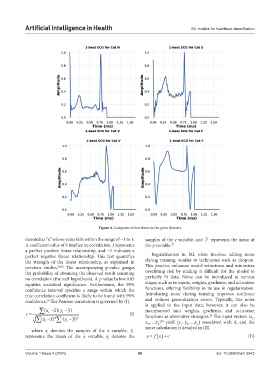
                                           Figure 4. Categories of heartbeats in the given datasets

            denoted as “r,” whose value falls within the range of −1 to 1.   samples of the y variable, and  y  represents the mean of
            A coefficient value of 0 implies no correlation, 1 represents   the y variable. 27
            a perfect positive linear relationship, and −1 indicates a
            perfect negative linear relationship. This test quantifies   Regularization in ML often involves adding noise
            the strength of the linear relationship, as explained in   during training, similar to techniques such as dropout.
            previous studies. 24,25  The accompanying p-value gauges   This practice enhances model robustness and minimizes
            the probability of obtaining the observed result assuming   overfitting risk by making it difficult  for  the model to
            no correlation (the null hypothesis). A p-value below 0.05   perfectly fit data. Noise can be introduced at various
            signifies statistical significance. Furthermore, the 95%   stages, such as in inputs, weights, gradients, and activation
            confidence interval specifies a range within which the   functions, offering flexibility in its use in regularization.
            true correlation coefficient is likely to be found with 95%   Introducing noise during training improves resilience
            confidence.  The Pearson correlation is governed by (I).  and reduces generalization errors. Typically, this  noise
                     26
                                                               is applied to the input data; however, it can also be
                  ∑ (  –  )(  –  ) x  xy  y                    incorporated into weights, gradients, and activation
            r =       i     i                           (I)    functions as alternative strategies.  The input vectors {x ,
                                                                                          28
                ∑  ( –  )²x i  x  ∑   (  –  )²y i  y           x ,…,x }  yield {y ,  y ,…,y } associated with it, and the
                                                                                                            1
                                                                     18
                                                                    n
                                                                2
                                                                                     n
                                                                              1
                                                                                 2
                                                               noise calculation is detailed in (II).
              where  x  denotes the samples of the  x variable,  x
                     i
            represents the mean of the  x variable, y  denotes the   y  = fx                               (II)
                                                                    ( ) ε+
                                               i
            Volume 1 Issue 4 (2024)                         65                               doi: 10.36922/aih.3543

