


Page 106 - AIH-2-1
P. 106
Artificial Intelligence in Health                                     EBNA1 inhibitors against EBV in NPC


                         A                      B                      C


                         D                      E                       F


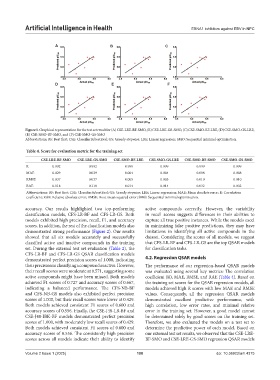
            Figure 5. Graphical representation for the test set result for (A) CSE-LRE-BF-SMO, (B) CSE-LRE-GS-SMO, (C) CSE-SMO-BF-LRE, (D) CSE-SMO-GS-LRE,
            (E) CSE-SMO-BF-SMO, and (F) CSE-SMO-GS-SMO
            Abbreviations: BF: Best first; CSE: ClassifierSubsetEval; GS: Greedy stepwise; LRE: Linear regression; SMO: Sequential minimal optimization.

            Table 4. Score for evaluation metric for the training set

                   CSE‑LRE‑BF‑SMO  CSE‑LRE‑GS‑SMO  CSE‑SMO‑BF‑LRE  CSE‑SMO‑GS‑LRE  CSE‑SMO‑BF‑SMO  CSE‑SMO‑GS‑SMO
            R          0.992           0.992          0.999          0.999           0.999          0.999
            MAE        0.029           0.029          0.004          0.004           0.008          0.008
            RMSE       0.037           0.037          0.005          0.005           0.010          0.010
            RAE        0.118           0.118          0.014          0.014           0.032          0.032
            Abbreviations: BF: Best first; CSE: ClassifierSubsetEval; GS: Greedy stepwise; LRE: Linear regression; MAE: Mean absolute error; R: Correlation
            coefficient; RAE: Relative absolute error; RMSE: Root mean squared error; SMO: Sequential minimal optimization.

            accuracy. Our results highlighted two top-performing   active compounds correctly. However, the variability
            classification  models,  CFS-LR-BF  and  CFS-LR-GS.  Both   in recall scores suggests differences in their abilities to
            models exhibited high precision, recall, F1, and accuracy   capture all true positive instances. While the models excel
            scores. In addition, the rest of the classification models also   in  minimizing  false  positive  predictions,  they  may  have
            demonstrated strong performance (Figure 2). Our results   limitations in identifying all active compounds in the
            showed that all six models accurately and successfully   dataset. Considering the scores of all models, we suggest
            classified active and inactive compounds in the training   that CFS-LR-BF and CFS-LR-GS are the top QSAR models
            set. During the external test set evaluation (Table 2), the   for classification tasks.
            CFS-LR-BF and CFS-LR-GS QSAR classification models
            demonstrated perfect precision scores of 1.000, indicating   4.2. Regression QSAR models
            their precision in classifying a compound as active. However,   The performance of our regression-based QSAR models
            their recall scores were moderate at 0.571, suggesting some   was  evaluated  using  several  key  metrics:  The  correlation
            active compounds might have been missed. Both models   coefficient (R), MAE, RMSE, and RAE (Table 4). Based on
            achieved F1 scores of 0.727 and accuracy scores of 0.667,   the training set scores for the QSAR regression models, all
            indicating a balanced performance. The CFS-NB-BF   models achieved high R scores with low MAE and RMSE
            and CFS-NB-GS models also exhibited perfect precision   values. Consequently, all the regression QSAR models
            scores of 1.000, but their recall scores were lower at 0.429.   demonstrated excellent predictive performance, with
            Both models achieved consistent F1 scores of 0.600 and   high correlation, low error rates, and minimal relative
            accuracy scores of 0.556. Finally, the CSE-J48-LR-BF and   error in the training set. However, a good model cannot
            CSE-J48-IBK-BF models demonstrated perfect precision   be determined solely by good scores on the training set.
            scores of 1.000, with moderately low recall scores of 0.429.   Therefore, we also evaluated the models on a test set to
            Both models achieved consistent F1 scores of 0.600 and   determine the predictive power of each model. Based on
            accuracy scores of 0.556. The consistently high precision   our external test set results, we observed that the CSE-LRE-
            scores across all models indicate their ability to identify   BF-SMO and CSE-LRE-GS-SMO regression QSAR models


            Volume 2 Issue 1 (2025)                        100                               doi: 10.36922/aih.4375

