


Page 107 - AIH-2-1
P. 107
Artificial Intelligence in Health                                     EBNA1 inhibitors against EBV in NPC


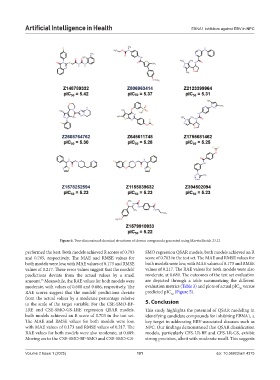
                          Figure 6. Two-dimensional chemical structures of chosen compounds generated using MarvinSketch 23.12

            performed the best. Both models achieved R scores of 0.703   SMO regression QSAR models, both models achieved an R
            and 0.705,  respectively.  The  MAE  and  RMSE  values  for   score of 0.703 in the test set. The MAE and RMSE values for
            both models were low, with MAE values of 0.173 and RMSE   both models were low, with MAE values of 0.173 and RMSE
            values of 0.217. These error values suggest that the models’   values of 0.217. The RAE values for both models were also
            predictions deviate from the actual values by a small   moderate, at 0.689. The outcomes of the test set evaluation
            amount.  Meanwhile, the RAE values for both models were   are depicted through a  table summarizing the different
                  45
            moderate, with values of 0.688 and 0.686, respectively. The   evaluation metrics (Table 3) and plots of actual pIC  versus
                                                                                                       50
            RAE scores suggest that the models’ predictions deviate   predicted pIC  (Figure 5).
                                                                          50
            from the actual values by a moderate percentage relative
            to the scale of the target variable. For the CSE-SMO-BF-  5. Conclusion
            LRE  and  CSE-SMO-GS-LRE  regression  QSAR  models,   This study highlights the potential of QSAR modeling in
            both models achieved an R score of 0.703 in the test set.   identifying candidate compounds for inhibiting EBNA1, a
            The  MAE  and  RMSE  values  for  both  models  were  low,   key target in addressing EBV-associated diseases such as
            with MAE values of 0.173 and RMSE values of 0.217. The   NPC. Our findings demonstrated that QSAR classification
            RAE values for both models were also moderate, at 0.689.   models, particularly CFS-LR-BF and CFS-LR-GS, exhibit
            Moving on to the CSE-SMO-BF-SMO and CSE-SMO-GS-    strong precision, albeit with moderate recall. This suggests


            Volume 2 Issue 1 (2025)                        101                               doi: 10.36922/aih.4375

