


Page 69 - AIH-2-1
P. 69
Artificial Intelligence in Health                                Algorithm and metal oxide nanoparticle in MRI


                         A                                           B


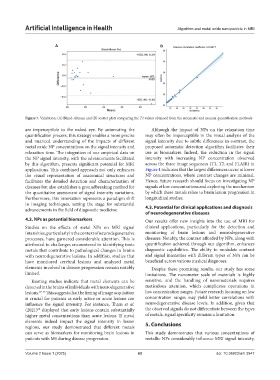
            Figure 7. Validation. (A) Bland‒Altman and (B) scatter plots comparing the T1 values obtained from the automatic and manual quantification methods

            are imperceptible to the naked eye. By automating the   Although the impact of NPs on the relaxation time
            quantification process, this strategy enables a more precise   may  often  be  imperceptible  in  the  visual  analysis  of  the
            and nuanced understanding of the impacts of different   signal intensity due to subtle differences in contrast, the
            metal oxide NP concentrations on the signal intensity and   proposed automatic detection algorithm facilitates their
            relaxation time. The integration of our empirical data on   use as biomarkers. Indeed, the reduction in the signal
            the NP signal intensity, with the advancements facilitated   intensity with increasing NP concentration observed
            by this algorithm, presents significant potential for MRI   across the three image sequences (T1, T2, and FLAIR) in
            applications. This combined approach not only enhances   Figure 4 indicates that the largest differences occur at lower
            the visual representation of anatomical structures and   NP concentrations, where contrast changes are minimal.
            facilitates the detailed detection and characterization of   Hence, future research should focus on investigating NP
            diseases but also establishes a groundbreaking method for   signals at low concentrations and exploring the mechanism
            the quantitative assessment of signal intensity variations.   by which these metals relate to brain lesion progression in
            Furthermore, this innovation represents a paradigm shift   longitudinal studies.
            in imaging techniques, setting the stage for substantial
            advancements in the field of diagnostic medicine.  4.3. Potential for clinical applications and diagnosis
                                                               of neurodegenerative diseases
            4.2. NPs as potential biomarkers                   Our results offer new insights into the use of MRI for

            Studies on the effects of metal NPs on MRI signal   clinical applications, particularly for the detection and
            intensities, particularly in the context of neurodegenerative   monitoring  of  brain  lesions  and  neurodegenerative
            processes, have garnered considerable attention. This is   diseases. Notably, the contrast afforded by NPs, along with
            attributed to challenges encountered in identifying toxic   quantification achieved through our algorithm, enhances
            metals that contribute to pathological changes in brains   diagnostic capabilities. The ability to modulate contrast
            with neurodegenerative lesions. In addition, studies that   and signal intensities with different types of NPs can be
            have monitored cerebral lesions and analyzed metal   beneficial across various medical diagnoses.
            elements involved in disease progression remain notably   Despite these promising results, our study has some
            limited.                                           limitations. The nanometer scale of materials is highly
              Existing studies indicate that metal elements can be   sensitive, and  the  handling  of nanomaterials  requires
            detected in the brains of individuals with neurodegenerative   meticulous attention, which complicates operations in
            lesions. 69-73  This suggests that the timing of image acquisition   low concentration ranges. Future research focusing on low
            is crucial for patients as early active or acute lesions can   concentration ranges may yield better correlations with
            influence the signal intensity. For instance, Tham  et al.   neurodegenerative disease levels. In addition, given that
            (2021)  displayed that early lesions contain substantially   the observed signals do not differentiate between the types
                 69
            higher metal concentrations than acute lesions. If metal   of metals, signal specificity remains a limitation.
            elements indeed impact the signal intensity in lesion
            regions, our study demonstrated that different metals   5. Conclusions
            can serve as biomarkers for monitoring brain lesions in   This study demonstrates that various concentrations of
            patients with MS during disease progression.       metallic NPs considerably influence MRI signal intensity,


            Volume 2 Issue 1 (2025)                         63                               doi: 10.36922/aih.3947

