


Page 67 - AIH-2-1
P. 67
Artificial Intelligence in Health                                Algorithm and metal oxide nanoparticle in MRI


                         A                                   B


                         C                                   D


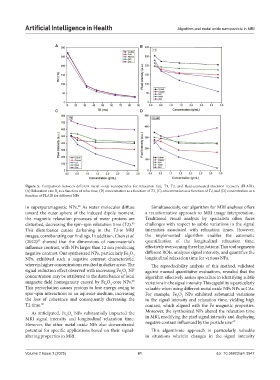
            Figure  5. Comparison between different metal oxide nanoparticles for relaxation rate, T1, T2, and fluid-attenuated inversion recovery (FLAIR).
            (A) Relaxation rate R as a function of echo time, (B) concentration as a function of T1, (C) concentration as a function of T2, and (D) concentration as a
                         2
            function of FLAIR for different NPs
            in superparamagnetic NPs.  As water molecules diffuse   Simultaneously, our algorithm for MRI analyses offers
                                  20
            toward the outer sphere of the induced dipole moment,   a transformative approach to MRI image interpretation.
            the magnetic relaxation processes of water protons are   Traditional visual analysis by specialists often faces
            disturbed, decreasing the spin‒spin relaxation time (T2).    challenges with respect to subtle variations in the signal
                                                         53
            This disturbance causes darkening in the  T2-w MRI   intensities associated with relaxation times. However,
            images, corroborating our findings. In addition, Chen et al.   the implemented algorithm enables the automatic
            (2022)  showed that the dimensions of nanomaterial’s   quantification of the longitudinal relaxation time,
                 67
            influence contrast, with NPs larger than 12 nm producing   effectively overcoming these limitations. This tool segments
            negative contrast. Our synthesized NPs, particularly Fe O    different ROIs, analyzes signal intensity, and quantifies the
                                                          3
                                                        2
            NPs, exhibited such a negative contrast characteristic,   longitudinal relaxation time for various NPs.
            wherein higher concentrations resulted in darker areas. The   The reproducibility analysis of this method, validated
            signal reduction effect observed with increasing Fe O  NP   against manual quantitative evaluations, revealed that the
                                                     2
                                                       3
            concentration may be attributed to the disturbance of local   algorithm effectively assists specialists in identifying subtle
            magnetic field homogeneity caused by Fe O -core NPs.    variations in the signal intensity. This capability is particularly
                                                         68
                                                3
                                              2
            This perturbation causes protons to lose energy owing to   valuable when using different metal oxide NPs NPs as CAs.
            spin‒spin interactions in an aqueous medium, increasing   For example, Fe O  NPs exhibited substantial variations
                                                                            2
                                                                              3
            the loss of coherence and consequently decreasing the   in the signal intensity and relaxation time, yielding high
            T2 time. 68                                        contrast, which aligned with the Fe magnetic properties.
              As anticipated, Fe O  NPs substantially impacted the   Moreover, the synthesized NPs altered the relaxation time
                             2
                               3
            MRI signal intensity and longitudinal relaxation time.   in MRI, modifying the pixel signal intensity and displaying
                                                                                                    67
            However,  the  other  metal  oxide  NPs  also  demonstrated   negative contrast influenced by the particle size.
            potential for specific applications based on their signal-  This algorithmic approach is particularly valuable
            altering properties in MRI.                        in situations wherein changes in the signal intensity
            Volume 2 Issue 1 (2025)                         61                               doi: 10.36922/aih.3947

