


Page 82 - AIH-2-1
P. 82
Artificial Intelligence in Health                                       ViT for Glioma Classification in MRI


                         A                                   B


                                                    C


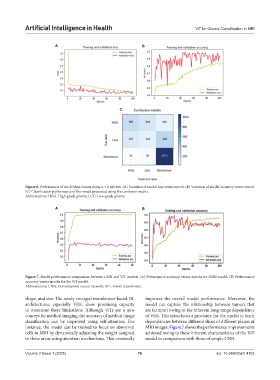
            Figure 6. Performance of model fine-tuning using 4 × 4 patches. (A) Variation of model loss versus epoch. (B) Variation of model accuracy versus epoch.
            (C) Classification performance of the model presented using the confusion matrix.
            Abbreviations: HGG: High-grade glioma; LGG: Low-grade glioma


                         A                                   B


            Figure 7. Model performance comparison between CNN and ViT models. (A) Performance accuracy versus epochs for CNN model. (B) Performance
            accuracy versus epochs for the ViT model.
            Abbreviations: CNN: Convolutional neural network; ViT: Vision transformer.

            shape, and size. The newly emerged transformer-based DL   improves the overall model performance. Moreover, the
            architectures, especially ViTs, show promising capacity   model can capture the relationship between tumors that
            to overcome these limitations. Although ViTs are a new   are far apart owing to the inherent long-range dependency
            concept for medical imaging, the accuracy of medical image   of ViTs. This introduces a provision for the model to learn
            classification can be improved using self-attention. For   dependencies between different slices of different planes of
            instance, the model can be trained to focus on abnormal   MRI images. Figure 7 shows the performance improvements
            cells in MRI by dynamically adjusting the weight assigned   achieved owing to these inherent characteristics of the ViT
            to these areas using attention mechanisms. This eventually   model in comparison with those of simple CNN.


            Volume 2 Issue 1 (2025)                         76                               doi: 10.36922/aih.4155

