


Page 38 - AIH-2-2
P. 38
Artificial Intelligence in Health                                         New drug discovery in the AI era


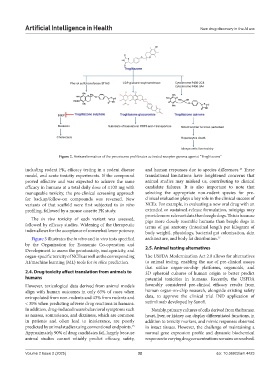
                          Figure 2. Biotransformation of the peroxisome proliferator-activated receptor gamma agonist “Troglitazone”

            including rodent PK, efficacy testing in a rodent disease   and human responses due to species differences.  These
                                                                                                       16
            model, and acute toxicity experiments. If the compound   translational limitations have heightened concerns that
            proved effective and was expected to achieve the same   animal  studies  may  mislead  us,  contributing  to  clinical
            efficacy in humans at a total daily dose of ≤100 mg with   candidate failures. It is also important to note that
            manageable  toxicity,  the  pre-clinical  screening  approach   selecting the appropriate non-rodent species for pre-
            for backup/follow-on compounds was reversed. New   clinical evaluation plays a key role in the clinical success of
            variants of that scaffold were first subjected to  in vitro   NCEs. For example, in evaluating a new oral drug with an
            profiling, followed by a mouse cassette PK study.  extended or sustained-release formulation, minipigs may
                                                               provide more relevant data than beagle dogs. This is because
              The  in  vivo  toxicity  of  each  variant  was assessed,   pigs more closely resemble humans than beagle dogs in
            followed by efficacy studies. Widening of the therapeutic   terms of gut anatomy (intestinal length per kilogram of
            index allows for the acceptance of somewhat lower potency.  body weight), physiology, bacterial gut colonization, skin

              Figure 3 illustrates the in vitro and in vivo tests specified   architecture, and body fat distribution. 17
            by the Organization for Economic Co-operation and
            Development to assess the genotoxicity, mutagenicity, and   2.5. Animal testing alternatives
            organ-specific toxicity of NCEs as well as the corresponding   The USFDA Modernization Act 2.0 allows for alternatives
            AI/machine learning (ML) tools for in silico prediction.  to animal testing, enabling the use of pre-clinical assays
                                                               that utilize organ-on-chip platforms, organoids, and
            2.4. Drug toxicity effect translation from animals to   3D  spheroid  cultures  of  human origin  to better  predict
            humans                                             potential toxicities in humans. Recently, the USFDA
            However, toxicological data derived from animal models   favorably considered pre-clinical efficacy results from
            align with human outcomes in only 63% of cases when   human organ-on-chip research, alongside existing safety
            extrapolated from non-rodents and 43% from rodents and   data, to approve the clinical trial IND application of
            < 30% when predicting adverse drug reactions in humans.   sutimlimab developed by Sanofi.
            In addition, drug-induced neurobehavioral symptoms such   Notably, primary cultures of cells derived from the human
            as nausea, somnolence, and dizziness, which are common   heart, liver, or kidney can display differentiated functions, in
            in patients and often lead to intolerance, are poorly   addition to toxicity markers, and mimic responses observed
            predicted by animal studies using conventional endpoints.    in  intact  tissues. However, the  challenge  of maintaining a
                                                         15
            Approximately 90% of drug candidates fail, largely because   normal gene expression profile and dynamic biochemical
            animal studies cannot reliably predict efficacy, safety,   responses to varying drug concentrations remains unresolved.


            Volume 2 Issue 2 (2025)                         32                               doi: 10.36922/aih.4423

