


Page 41 - AIH-2-2
P. 41
Artificial Intelligence in Health                                         New drug discovery in the AI era


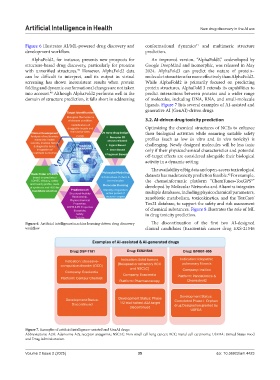
            Figure 6 illustrates AI/ML-powered drug discovery and   conformational dynamics  and multimeric structure
                                                                                    41
            development workflow.                              prediction.
              AlphaFold2, for instance, presents new prospects for   An improved version, “AlphaFold3,” codeveloped by
            structure-based  drug  discovery,  particularly  for  proteins   Google DeepMind and Isomorphic, was released in May
            with  unverified structures.   However,  AlphaFold2  data   2024. AlphaFold3 can predict the nature of protein–
                                  39
            can be difficult to interpret, and its output in virtual   molecule interactions far more effectively than AlphaFold2.
            screening has  shown  inconsistent  results  when  protein   While AlphaFold2 is primarily focused on predicting
            folding and dynamic conformational changes are not taken   protein structures, AlphaFold 3 extends its capabilities to
            into account.  Although AlphaFold2 performs well in the   predict interactions between proteins and a wider range
                      40
            domain of structure prediction, it falls short in addressing   of molecules, including DNA, RNA, and small-molecule
                                                               ligands. Figure 7 lists several examples of AI-assisted and
                                                               generative AI (GenAI)-driven drugs.

                                                               3.2. AI-driven drug toxicity prediction
                                                               Optimizing the chemical structures of NCEs to enhance
                                                               their biological activities while ensuring suitable safety
                                                               profiles  (such as low  in vitro and  in vivo toxicity) is
                                                               challenging. Newly designed molecules will be less toxic
                                                               only if their physicochemical characteristics and potential
                                                               off-target effects are considered alongside their biological
                                                               activity in a dynamic setting.
                                                                 The availability of big data and open-access toxicological
                                                               datasets has made toxicity prediction feasible.  For example,
                                                                                                  42
                                                               the  chemoinformatic  platform  “ChemTunes•ToxGPS®”
                                                               developed by Molecular Networks and Altamira integrates
                                                               multiple databases, including physicochemical parameters,
                                                               xenobiotic metabolism, toxicokinetics, and the ToxCast/
                                                               Tox21 database, to support the safety and risk assessment
                                                               of chemical substances. Figure 8 illustrates the role of ML
                                                               in drug toxicity prediction.

            Figure 6. Artificial intelligence/machine learning-driven drug discovery   The discontinuation of the first two AI-designed
            workflow                                           clinical candidates (Exscientia’s cancer drug EXS-21546


            Figure 7. Examples of artificial intelligence-assisted and GenAI drugs
            Abbreviations: A2A: Adenosine A2a receptor antagonist; NSCLC: Non-small cell lung cancer; RCC: Renal cell carcinoma; USFDA: United States Food
            and Drug Administration.


            Volume 2 Issue 2 (2025)                         35                               doi: 10.36922/aih.4423

